
On the Joy of Giving at Christmas
/It is more blessed to give than to receive. (Acts 20:35)
You will find the glory of charity more than a match for the parade of power. (St. Ambrose of Milan)
Then pealed the bells more loud and deep: / "God is not dead, nor doth He sleep; / The Wrong shall fail, / The Right prevail, / With peace on earth, good-will to men." (Henry Wadsworth Longfellow, Christmas Bells)
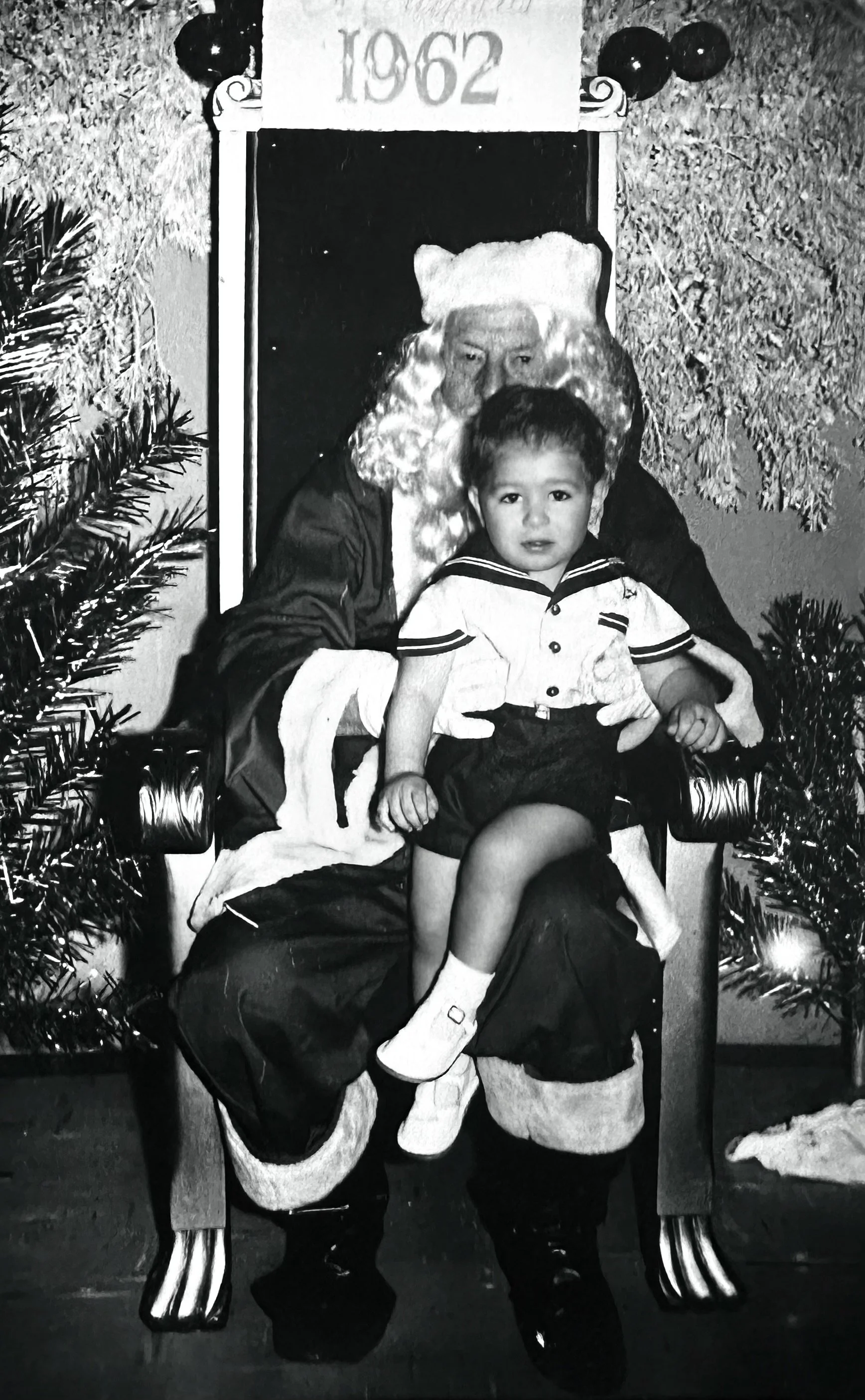
MICHael family archives
When I was a little boy, Christmas was my absolute favourite time of the year, as it is for most children. There would be visits from my cousins and, of course, the anticipation of the presents. It was the one day my beloved Pappa would close our ‘shoppe’ (the Reno Café) early, and we would celebrate with a roast he had especially prepared for the occasion. Other than this day, it was business as usual for my parents, who worked at the shop seven days a week, and this over a period of fifty years, a decade less for our Momma. The police would turn a blind eye when George poured a glass of beer for the regulars, and the coppers themselves would even pop in for a drink. Outside, the Salvation Army band dressed in their immaculate crispy blue uniforms, and playing their shiny brass instruments, would march up and down King Street Newtown, performing the carols as only they could. “O Come All Ye Faithful” is still my favourite. The Reno itself was decked out in the most fabulous Christmas decorations, including the ‘psychedelic’ pleated rainbow cockade fans, brought over from England—and in the afternoon Santa Claus would drop by though we soon cottoned on that it was none other than Mr. Arthur, our rotund milkman!
We understand the reason behind this celebration of the Nativity of Christ, its ineffable wonder at the theology of the Incarnation: “The Word became flesh and made his dwelling among us” (Jn. 1:14). As for the wise men themselves? We do not know their number. We normally refer to three given the gifts brought to the infant Jesus—gold, frankincense, and myrrh (Matt. 2:11). For those who will attend the Christmas services you will hear some wonderful sermons preached on the day, even had I possessed such a charism, this would not be my intent today. Instead, I would like to briefly focus on this enduring manifestation of love, in the exchange of gifts and the sharing of our best wishes the one with the other.
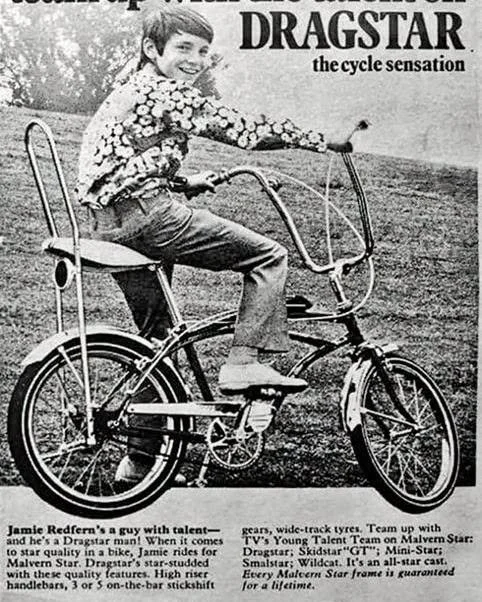
Malvern Star dragstar
If we stop to think about it, whatever the material worth of our gifts, one way or another, they will not survive the test of time. Even the finest jewellery can be lost or stolen. On other occasions, the most well-considered surprise may not be appreciated. The most wonderful gift I received from my parents as a child, still has the power to give me a lovely quiver whenever I reflect on it. How I longed for that present: the Malvern Star 3-speed Dragstar (much as I would, almost a ‘hundred years’ later, for those hardcopy editions of Solzhenitsyn’s The Gulag Archipelago from Katina). It was a long frame with a purple seat and gold stripes. Even this well-built bicycle would, in time, rust and fall apart. Yet what remained, impervious to the rust and decay, is the feeling of joy at the recollection of it all, and the abiding love of my parents who had discerned the desire of my heart.
As we move on in years and ponder on the deeper lessons of Christmas, behind the silvery tinsel and its crass commercialisation, we are compelled to think of the more long-lasting possibilities of our gifts. Not only in the context of the building up of memories together with our children, but also with our neighbour. I understand neighbour in its more universal sense. Not merely as one who is near (Gk. plēsion), but in considering Christ’s well-known response to the question of who our neighbour is, through the exemplum of the Parable of the Good Samaritan (Lk. 10:25-37). Frederick Buechner, the Presbyterian theologian, paraphrased the story in this way: “A neighbour is anyone who needs you, rather than a locally restricted or legally defined individual.” This is the expression of a godly compassion fuelled by a kindly spirit, and of a love that does not recognise the margins of artificial borders that would separate us. Separation, “the act of setting apart or dividing” will of course, go by many names. This could sound too extreme or even impossibly idealistic to some ears, but it is exactly how St. Nikolai Velimirovich described the Incarnation, as an astonishing event driven by the Creator’s radical “Insane Love” to bridge the divide.
The best gift we can give another, one that will not one day become useless or broken, is the gift of peace and goodwill. Sometimes this may simply take the form of a hot meal for a hungry soul; a letter to one who has been waiting for release; telling a stranger it will all work out well; praying that your adversary’s stars align; visiting the sick or the dying on Christmas Eve; or thanking our neighbour each morning for not forgetting our name.
*******
The Zen Master, Thich Nhat Hanh, once said that the most valuable gift we can give another is our true presence. He expressed this in the simplest of words: “Darling, I am there for you.” I pray that, especially on this Christmas Day, my darling wife, Katina, recognises this when we exchange our presents on the 25th. Thank you for your enduring example of resilience, compassionate-love, and the wisdom found in silence. I shall always remember, even when fighting for your life far away from home in an ICU bed in Arizona, one of the last things you did was to reach out to your students. For me, there could be no finer example of your inmost priorities and your uncompromising work ethic. And the love for those whose lives you have touched, and who have in turn touched ours.
Merry Christmas to you my darling, Katina,
And to all our fabulous friends, love, light, and peace.