
Questions that we can only answer under the firelight
/“If it is possible, as far as it depends on you, live at peace with everyone.” (Rom. 12:18)
“For others, in spite of myself, from myself.” (Emmanuel Levinas)
I recently received one of those beautiful letters from a friend that lifts your spirits and reminds you not only of the vital importance of friendship, but also that the world contains far more tender-hearted people than we might imagine. The letter, an email in truth, was sent to encourage me during this season of my journey. These wonderful words rich in compassion were to be understood as a sign of love and affection from a gentle and discerning soul. I reflected on this letter for some time and I have turned to it often, and to others of a similar humanity. What strikes me above all with such compassionate expressions of solidarity is something all of our true friends have in common, and this is not only the depth and elevation of their souls, but also their practice of giving others the “benefit of the doubt.” What is the benefit of the doubt? And what does it mean in the context of friendship but also in our broader communion with other people, or in other words, the Levinasian “Other”.
These oftentimes, life-giving words “the benefit of the doubt,” are, unless I am mistaken, a direct evolution from the legal principle “of reasonable doubt.” As flawed human beings ourselves we are severely limited to the truth, and could possess only a skewed perspective on reality. To give the benefit of the doubt will not rarely mean to dramatically change a life, to affect generations, and to even save a soul. It is to accept in ‘good faith’ that the other’s intentions were not malevolent or intended to cause harm, that whatever actions we might have misread as wrong were unintended or yes, even a mistake from a place of a momentary weakness or lapse of judgement. It is, of course, a lot easier for older souls to practise this precious charity on account of their familiarity of the human condition with all of its fragilities and contradictions. And the fact, that they too, have been the recipients of this grace, and are now paying it forward. One of the more significant reasons why this grace is withheld is its closeness to the ideal of forgiveness. Ordinarily, it can be difficult to distinguish between the two, though forgiveness is typically much harder, since it involves a reciprocal movement of humility and self-knowledge.
The benefit of the doubt might also challenge our own ethics, forcing us to confront uncomfortable truths about ourselves. This could in some instances prove frightening. We may come to believe that we are capable of what ‘bad’ we might suppose in others, and so we see in the other only that which we could perceive within ourselves. If we do not trust, we may begin to doubt our own capacity to be trustworthy. These are difficult questions that we can only answer under the firelight. What then are the enduring profits of presuming innocence and granting a second chance? In short, it can save a fellow human being from a lifetime of anxiety and anguish, and in some instances, as I have already written, literally save a life. An action of grace once seeded can bring delight to those who come after us and establish new friendships and communities of love; an action made in ‘bad faith’ can create enmities that once established will normally also replicate into the future. I must confess, despite my age and experience, I still cannot fully understand how someone can willingly punish another for a perceived wrong, knowing full well that in the end no good can ever come of it.
“As the Searcher of hearts, the Lord knows that men are liable to very frequent trespass, and that, having fallen, they often rise up again; therefore He has given us the commandment to frequently forgive trespasses, and He Himself is the first to fulfill His holy word. As soon as you say from your whole heart, ‘I repent,’ you will be immediately forgiven.” (St. John of Kronstadt)
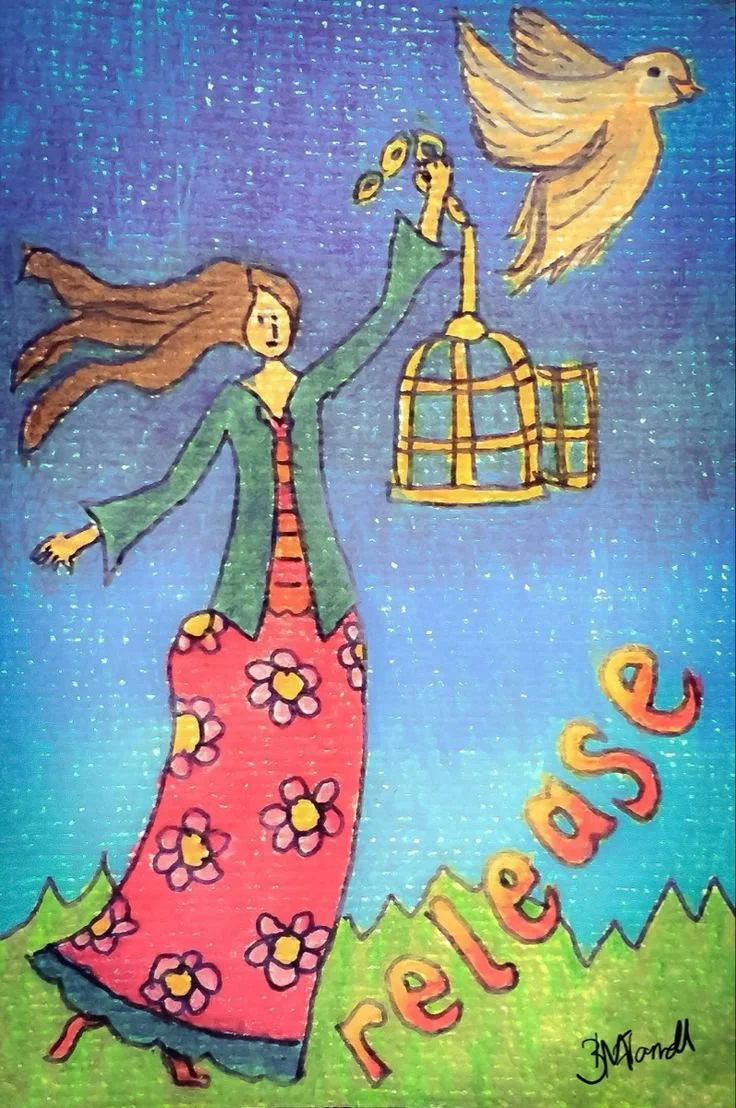
https://pin.it/3pKNx83Fk | Faith hope Love art
My own heart is a long way from perfect. I will stray and have strayed from my creed, the one I still dare to preach. I am still learning “the good” (the agathon), praying that as the days pass, I remove as many barriers as I can in the pursuit of this virtue. People are inherently compassionate and charitable, this too I have found, when you thirst and ask for a cup of water, by far the majority will offer you that cup. And if we might remember this truth, giving the benefit of the doubt, not forgetting how delightful it could be both to the one and to the other, the offering of this noble gift becomes much harder to withhold. If you could allow me one further point, especially for my younger readers, this does not mean to be naive to the darker aspects of the human condition. In time, you will come to recognise these landscapes of brokenness, and through them you will enter those deeper places where the harvest is more bountiful still, for you will be asked to practise even harder things. This is the road of Gethsemane, the journey into the profound mystery and movement of love and forgiveness. One of the greatest things we can do in this life, is to give hope to the “Other” and to release them from their anguish that they might not only flourish, but that they themselves will soon enough pay it forward. Invariably, it will also bring out the best in ourselves, we will come nearer to our true name. Yes, I am more and more returning to old places and familiar spaces, but it is in truth all I know that could be of any use.