On the grief of losing the love of a beautiful friend
/In the end, we will remember not the words of our enemies, but the silence of our friends. (Martin Luther King Jr., Trumpet of Conscience)
Whenever someone who knows you disappears, you lose one version of yourself. Yourself as you were seen, as you were judged to be. Lover or enemy, mother or friend, those who know us construct us, and their several knowings slant the different facets of our characters like diamond cutter’s tools. (Salman Rushdie, The Ground Beneath Her Feet)
I have, of course, broached this subject in other ways, but never, I think, with the same weight that I now carry in my heart. What encourages me to continue writing these little essays, which have taken on a more discernibly urgent mood in recent times, is not only the wonderful support with which you have received them, but also the knowledge that I am speaking to realities common to the human condition. Indeed, many of you will have lived through experiences much like those I have described and, in many cases, have addressed them far more eloquently than I could hope to do. And, yet, it is good that we speak to one and other in such ways, meeting in those places of vulnerability where so much of our hidden truth resides.
There is a suffering that can, for those who live with chronic pain, go deeper than the ache felt in the bones. It is the grief of being rejected by someone we love. These are the people whose faces fill our photo albums and with whom we have shared some of the largest moments of joy and sorrow in our life. Their absence can leave a wound that could seem impossible to heal. The relationships we had with these souls are of different degrees, and each loss brings with it a discrete sorrow to the heart. Here I will reflect on the loss of a like-minded friend, one who had for a season stuck closer than a brother (Prov. 18:24). The importance and archetypal beauty of friendship has been celebrated throughout the arts, and magnificently in the great epic narratives of Homer, to the searing confession of St. Gregory Nazianzus on the loss of his friend St. Basil the Great, and the notable essays on the same subject by C. S. Lewis:
For a friend with an understanding heart is worth no less than a brother. (Homer, The Odyssey)
Do not leave me here; / Do not, I beg: I swear upon your tomb, / Never will I forget you and move on; / I could not, if I wanted. (St. Gregory Nazianzus, Poems)
Eros will have naked bodies; Friendship naked personalities. (C. S. Lewis, The Four Loves)
Friendship is also attributed to our Creator and is a recurring motif common in the Scripture, and in Buddhism it is considered essential to one’s spiritual growth:
And the scripture was fulfilled that says, “Abraham believed God, and it was credited to him as righteousness,” and he was called God’s friend. (Jm. 2:23)
The friend who is a helper, the friend through thick and thin, the friend who gives good counsel, and the compassionate friend; these four are friends indeed. The wise understand this and attend on them carefully, like a mother her own child. (The Buddha, Sigalovada Sutta)
When Jesus Christ himself, was abandoned by his closest disciples during the hours of his most gruelling testing, at the Gethsemane temptation when they would fall asleep (and no less than on three occasions), and then on Calvary where outside of John they all would later flee, he allowed for the frailty of the human condition and freely gave of the benefit of the doubt knowing that: “[t]he spirit is willing, but the flesh is weak” (Matt. 26:41). Later he would build his Church on St. Peter “the Rock”, the one who had also denied him three times at the courtyard of the high priest. This is what a great benevolence a friend can deliver to another by crushing the silence and allowing for love and compassion to lift the other to their most utmost potential. Yes, as friends, we, too, do possess such ‘godly’ power to raise the other by not too quickly extinguishing the prospects of reconciliation. This was the same with Saints Peter and Paul, strongly antagonistic the one towards the other, to eventually reconcile and then to lay down the first foundations of the Church. So we do not give up hope. The seed that once gave birth to the oak though now made complete, lives on in the acorn. Friendships that were originally built on love are rarely completely extinguished, we sometimes only need but a little distance to allow for nature and for the deeper humanity to take their course.
One common trap in our grief is to deny that these individuals were true friends in the first place, and so we start to look for those ‘obvious’ patterns that might now prove it. Every previous slight or let down take on another more sinister connotation. Such counsel is short-term comfort and in the end doomed to failure. It can only contribute to an ongoing agonising. To begin with, it seems to me, to be self-contradictory. Such a negative perspective could suggest the same for ourselves. That is, were we too, then, not true friends? Relationships built over years of genuine concord and treasured experiences cannot be pretended. It does not take too long for fakery to manifest itself. And so, they were true friends to us, as we were to them. For this precious gift alone, it is good to be thankful. It is a difficult truth, especially if we have been deeply wounded, to accept that in almost every instance there was a strong love between the two souls. It is only natural when the pain goes deep, to look for any way out that might alleviate some of that suffering. Halfway through one of the most fabulous violin performances of Vivaldi’s “Winter” strings from Ray Chen’s bow broke. He continued to play. The music did not suffer and it went its course. Despite this visible disruption, the beauty of the score was not diminished.
The word concord comes from the Latin concordia (meaning harmony or agreement), which is built from con- (together) and cor (heart). Literally, it means "hearts together". It entered English through Old French (concorde) in the 12th century to mean peace, union, or friendly agreement. (Wiktionary)

https://unsplash.com/photos/two-woman-sitting-on-beach-sand-while-facing-sunlight-hkkQbPa49UA
The grief we live through, this intense emotional sorrow ordinarily associated with mourning, is caused by the "remembrance of things past," to recall Marcel Proust. A photograph; a song; a road; a scent; a Christmas gathering. A laugh you hear in the shopping mall that you would swear was your friend. Then you see the beloved. It IS them. They walk straight past or worse, they turn their back on you. These are excruciating moments should you experience them. These souls inhabit big pieces of our life. One can hurt from a difficult disease but the pain at such a blatant rejection can stay with you for years. It can cut in places deeper than that ache to the bones. So what happened? A miscommunication? An innocent mistake? A misplaced word spoken in anger? Not being there at a needful time because you could not. Ultimately, not being that ‘perfect’ friend. Who can be—and who has been able to measure up perfectly to that ideal? Yet, here is the archetypal form of the brother friend, to accept the one and other within the full realm of the graces, to be wise enough to at least accept, that we are all liable at some unforeseen moments in our life to fall short of the mark.
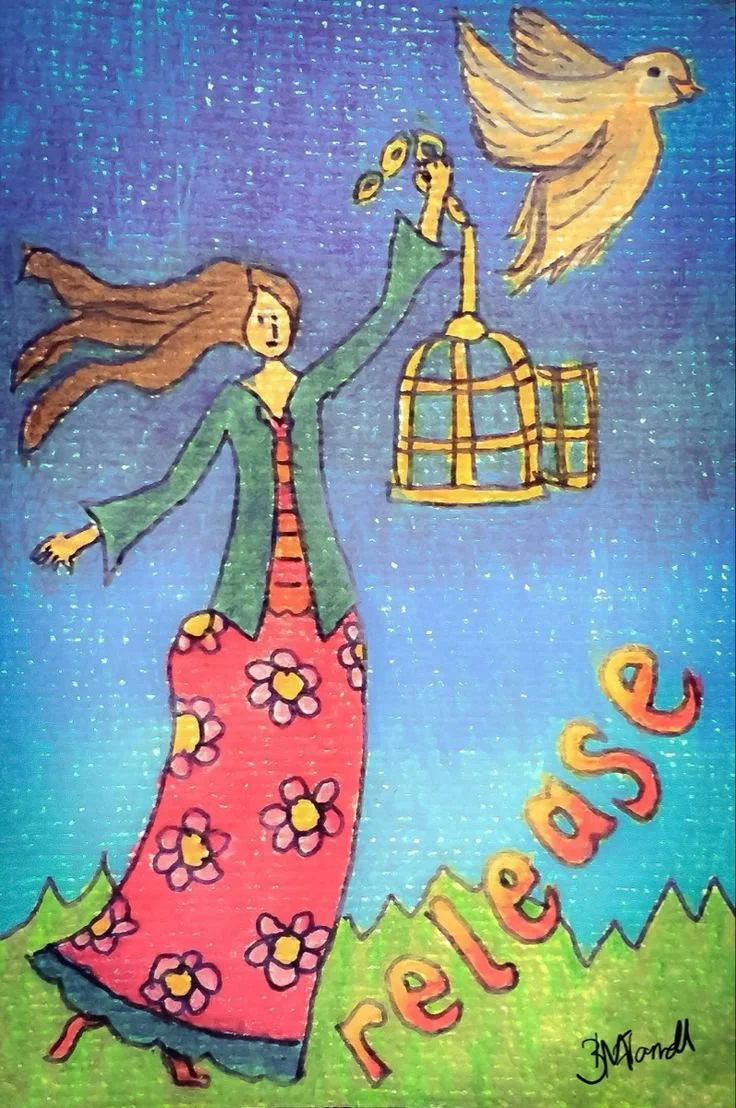
How can one respond to this unspeakable pain of a beloved’s silence? The recognition that we are all fragile and broken in the secret places, goes some way towards not only battling this grief but to also have compassion for our friend, they, too, are carrying their own cross in life. We are all looking to be loved and to be rescued from those burdens that haunt our hearts the most. Spending the remainder of our lives blaming the other for their silence will ultimately prove annihilating. Being the first to reach out requires both courage and vulnerability, and some friendships are worth the risk of a second rejection. That said, repeated attempts are not good for either of the souls. One might become more hardened in spirit, while the other could plunge further into grief. So there will come an hour when we must accept that things are unlikely to change. It will be the time to stop interrogating ourselves and the past in search of answers. This will be the moment when we have to make our own closure and not wait indefinitely for the other to deliver it. Our worth and dignity are not diminished when we are rejected. Self-identity and selfhood are not dependent on another’s perception of our presence and value in the world.
Our life’s journey and the gifts that we can offer to others and build on already existing meaningful friendships, do not all of a sudden come to an end because we might have been “ghosted”—and such a terrible word. Though very difficult at first, this rejection which in the beginning could appear to us to be impossible to overcome, will open the door to not only a profounder awareness of the self, but also to the founding of new friendships—and oftentimes in those places we might not have expected—on a city street in the middle of a downpour or in the corridors of a hospital ward. These new friendships will play their own significant part in carrying us through to the remainder of our lives. When our final days arrive, whenever that might be, we will be surrounded by those who have truly loved us, who have recognised the good intentions of our hearts, and who have inspired the best in us. As difficult as it might now be to believe, this terrible pain inflicted by those who were once dearest friends will, at that last hour be entirely forgotten, for they too would have by this time entered even more deeply into our hearts.