At different times I have wondered how I would respond

I do love the good-humoured mathematician and lay theologian John Lennox. Not only for his intellectual brilliance in articulating the apologetics of the Good News, in a manner evocative of the great C.S. Lewis, but also for the ways he has reminded me of a dear friend, the logos-inspired poet Les Murray. Yet there is something else as well. Especially given the present challenges in my own life, the charismatic Lennox has often spoken of “finishing life well.” This right counsel, takes us back to Saint Paul’s moral parenesis, which has inspired and lifted the spirits of countless souls across the centuries: “I have fought the good fight, I have finished the race, I have kept the faith” (2 Tim. 4:7).

https://pixabay.com/photos/flower-dandelion-wildflower-nature-7700011/

At different times I have wondered how I would respond if I were sitting in a specialist’s surgery, waiting to hear the results of medical tests for a potentially life-threatening disease. For instance, would I remain stoic upon hearing the word cancer? Would I break down, if only for a moment, terrified of what it could mean? Or might my reaction fall somewhere entirely outside what I had imagined? In truth, one never knows how they will respond to news—good or bad—until it actually happens. Is it, then, the same for a believer of a religious community, and particularly for one of its theologians? I was to learn this on a pleasant morning in Wollongong, in late January of this year, during a consultation with my empathetic urologist, Dr. R. It was not at all as one might have imagined. The news was delivered no differently than if a general practitioner were calmly informing you that it was nothing more troubling than a sore throat. Except that this time, it all appeared to unfold in slow motion. Each word carrying with it a resonance that would need to be newly explored and analysed: “I am sorry it is cancer—Michael, but it is not a death sentence.” For a few moments at least, it seemed as though I had stepped into another world. This is a place where the archetypes stood in sharper relief, and where at any moment they might cut straight through you.

This is the hour when one’s metaphysical beliefs, whether deeply theistic or commendably stoic are pulled apart and, for some, stretched to their breaking point. Suffering in its various guises, if we should allow it, can easily undo us. When death rises to speak in its own ex cathedra voice, there is, one way or another, little to say in reply. The Great Divide has spoken shāh māt ("the king is helpless")–Or is he? Maybe not quite yet. If you are familiar with Moritz Retzsch’s 1831 painting The Devil’s Checkmate and with the story of chess master Paul Morphy’s response, you will know what I mean. For those of us who belong to a religious community, how often have we heard, or ourselves declared, the words offered in consolation by the Prophet Hosea but later to be made famous by Saint Paul: “Where, O death, is your victory? Where, O death, is your sting?” (1 Cor. 15:55). The counter of every soul to such news is as unique as the individual response to our deepest joys or hardest sorrows. A range of emotions, natural to the human condition, can overwhelm us, and the comforting illusion that such things only happen to other people is fast destroyed. The reality is that it will happen to us all. Death comes, sooner or later—if not for us now, then to those we love, to our close of kin, and to our friends. And our hearts ache, too, at the daily images of lives taken in faraway places, without the blessings and benefits we ourselves have become ordinarily accustomed to. Perspective remains one of our most trustworthy teachers, and if we remain honest enough, it cannot fail us.

It all goes much too quickly. I could close my eyes and, for a few moments, go back to my untroubled teenage years, running about like a puffed-up bull on rugby league fields in Sydney and the country. Then before long I snap out of it. The mirror will make liars of us all. If we have not mentally prepared for this unavoidable and messy rencounter, one that philosophers and theologians alike agree will become the absolute test of our core beliefs, we are likely to panic and fall into those self-defeating emotions of denial and anger. Still, if we can get through this fiery trial and comprehend it as an awakening to something deeper and more nobler within us, then we will not only endure and persevere through it, but we will be initiated into revelations and lasting lessons we once believed beyond our reach. The giving and the asking of forgiveness becomes a commonplace experience. All manner of colour and sound become more vibrant and sharper. We can become humble, yet strong vessels of comfort to others. The expression of love and compassion are now as commonplace as our daily bread. Material aims and professional goals are much shifted or made altogether insignificant. Divine grace and moral strength can arrive in the most unexpected way. Saint Nilus of Sinai speaks in the tradition of Socrates (who posited that philosophy is a preparation for death): “You should always be waiting for death but not be afraid of it; both are indeed the real characteristics of a person who pursues wisdom.” This is the “memory of death” which the contemplatives of our major religious traditions practise, this they do in the most positive of ways as a reminder to cherish this present hour, and to not misuse the time we have each been given.

After a while these archetypical disclosures of the battle, should we open up ourselves to them, will allow for bursts of light to enter into our hearts. This is not to whitewash our suffering or our fears, these conditions are all too real, and they will leave their rough mark on both ourselves and on those we love, but how we respond to this confrontation and where we allow for the dark side of our imagination to take us, is what altogether matters at present. There will be the dark night when for a believer it could appear that the Father is scandalously absent, or for our other brothers and sisters to seem that it has all been meaningless. These are very much the same feelings of inner collapse and that dread condition beyond the disease of the body—Søren Kierkegaard reflected in these terms when speaking on the “sickness unto death” that is, the deepest of despairs. Our modern existentialists have similarly spoken of this paralysing angst, as “the nameless fear”. It is not out of place, then, to recall that as a young student of divinity many decades ago now, I was struck by this fascinating revelation, that in the New Testament Gospels, the God-Man’s most repeated exhortation was not to be afraid: “Take courage; it is I, do not be afraid” (Mk 6:50).

Seminary: The most difficult thing would be to change ourselves

Sydney-Gerringong

In Sydney this morning I had an interesting encounter with a young person at a bookstore when the conversation for one reason turned to seminaries (from the Latin seminarium for “seed plot”). Chance meetings can prove a catalyst to go back into past stories of our lives. I hope one day that I might be able to write down my own seminary experience, the place where some of us go that we might receive an education in theology. It is only afterwards we learn those places are in reality but a training ground for spiritual survival. Even now and after almost four decades, it is not an easy thing for me to revisit this period of my life. Allow me, if you will, to share but a small reflection going back to those times.

This college is unique—and it belongs to all of us. It could be said that it has an Australian body, a Greek mind, a bilingual tongue, and a heart that is distinctively Orthodox. (Dimitri Kepreotes, SAGOTC Students Yearbook, 1988)

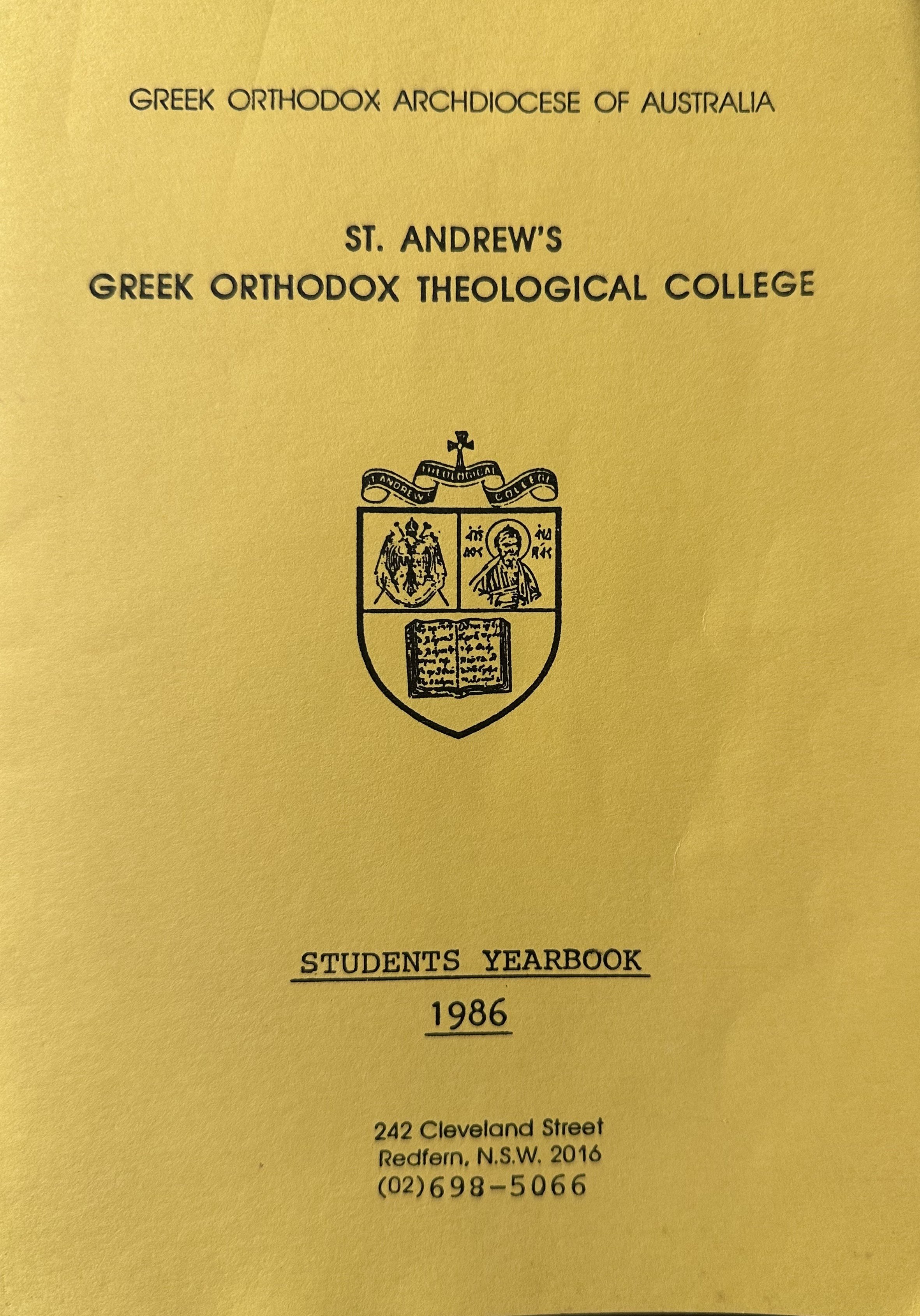
Following the final address of our Archbishop Stylianos, His Eminence Metropolitan Maximos read a warm message from His Holiness Patriarch Demetrios. This concluded the official opening and dedication of our new College; the dream was over and the reality of it all was just about to begin. (Spiros Haralambous, SAGOTC Students Yearbook, 1986)

Around fourteen young men of different dispositions and backgrounds started out in our first year of seminary in 1986 as the inaugural class of this new theological school in Australia (being an Eastern Orthodox institution and an accredited member of the Sydney College of Divinity SCD it was the first of its kind in the Southern Hemisphere). Some of us believed we were going to change the world. No more than a few weeks had passed and then there were nine. The “Messiah Complex” which afflicts a large number of seminarians did not last long. We were enthusiastic but hugely foolhardy in our aspirations. Those of us left after that initial loss of numbers were compelled to lower our original enthusiasm and expectations. Now it was simpler, or so we thought, how are we going to change the already compressing atmosphere of our new place of learning. Surely, we could at least do this—could we not? No, not even this. It is true I also discovered, what a discerning soul once said about seminaries, that they will (as a rule) “relegate Jesus to the background.” Not too many more weeks would pass and then we were down to seven.

Finally, let it be said that nothing good comes easy: should you be sincere in studying a “faithful theology” be prepared to carry thy cross. (M. G. Michael (Ed.), SAGOTC Students Yearbook, 1986)

We have triumphed in that we have grown and learnt to accept not only our responsibilities, but our limitations as well, to be more sensitive to our brother’s needs, to realize the importance of study—more importantly, to kneel in prayer. We have failed in that we could have been less assertive, less demanding, slower to anger and reprove, more humble. (Fr. Jeremiah Michael (Ed.), SAGOTC Students Yearbook 1988)

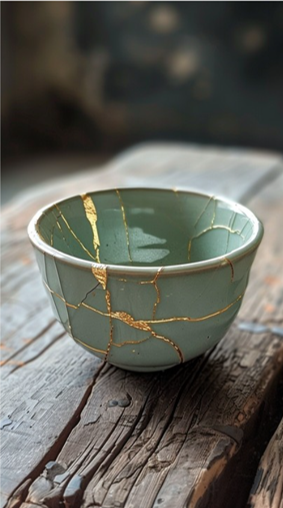
At the start of the second year two more of the younger seminarians would leave. We were now officially down to the “pioneering five”, as our little group would come to be known. As time progressed and each one of us would do battle with their own particular demons and personal disappointments, we arrived at the hardest and most difficult realization of them all—the most difficult thing would be to change ourselves. Metanoia does not play games. I should have known better. I was one of the older seminarians, a former police officer and already a graduate of another academic institution. I was twenty-five years old. Yet, even I would fall into these deep traps. Now, almost forty years later, I continue to fight with the last of these admissions—that indeed, the road to the restoration of the self is not only arduous but also long-lasting. Which, I must confess, has not become any easier and not for any lack of belief. Unless we learn to forgive but more importantly ask to be forgiven, we will not make spiritual progress. Human nature is terribly complex and we can be deceived even by the noblest of our ideals and intentions. So, please, give each other the room and space to grow and to evolve. Who among us has not been broken? The Japanese art of kintsugi has a great deal to teach us. We cannot ever fully know the background story of another soul’s journey or how our actions might adversely hurt them. These things, as well, you learn in a seminary. To teach the Divine Word, and to preach the Gospel, the “Good News”, is not to be taken lightly:

Not many of you should become teachers, my fellow believers, because you know that we who teach will be judged more strictly. (Jm. 3:1)

Outside some of the basics which we were able to collect over the four years of study (alas to afterwards even mangle many of those lessons), there remain two enduringly meaningful compensations from that time. First, we have the spirit within us to endure through almost anything so long as we have a reason, that is, a “meaningfulness” to persevere. Second, the most beautiful gift we can offer the other is compassion, that is, to “suffer with the other”—and that any pastoral theology however impressive in its exposition bereft of this charism is entirely, and absolutely without meaning. Lest, I have discouraged any soul from attending seminary (and this is certainly not my intention) there will be great days of spiritual delight, too, when you will believe with all of your heart and mind that here in this place—the sometimes “furnace”—is precisely where you had to come. You will learn to pray if indeed this is the desire of your heart and you will fall to your knees in earnest supplication. Studying theology is good. Practising the content of theology is even better. My only purpose here to forewarn you it is an arena where you must be well prepared to engage in spiritual warfare, at times brutal, with the self and the “bad” side of the ego. Pressures will arrive from every side. You will in all likelihood lose friends. You will be betrayed by some in whom you have placed your trust and perhaps had even loved. Your passions will surely be magnified. We come to seminaries wanting to be a Bonhoeffer or a Spurgeon or a Saint Maximus the Confessor, and then reality hits home hard. Above all let us work diligently on our own piece of clay and where we can help the other to do the same. For this is our lifelong task. Along the lines of what Carl Jung termed, “individuation” (the process of self-realization). We are made in the “image” but we forever work towards the “likeness”. I have thought of Christ’s “forty days and forty nights” (Matt. 4:1-11) in the desert as an analogy in some ways to the seminarian’s own testing—and especially if it leads to the priesthood.

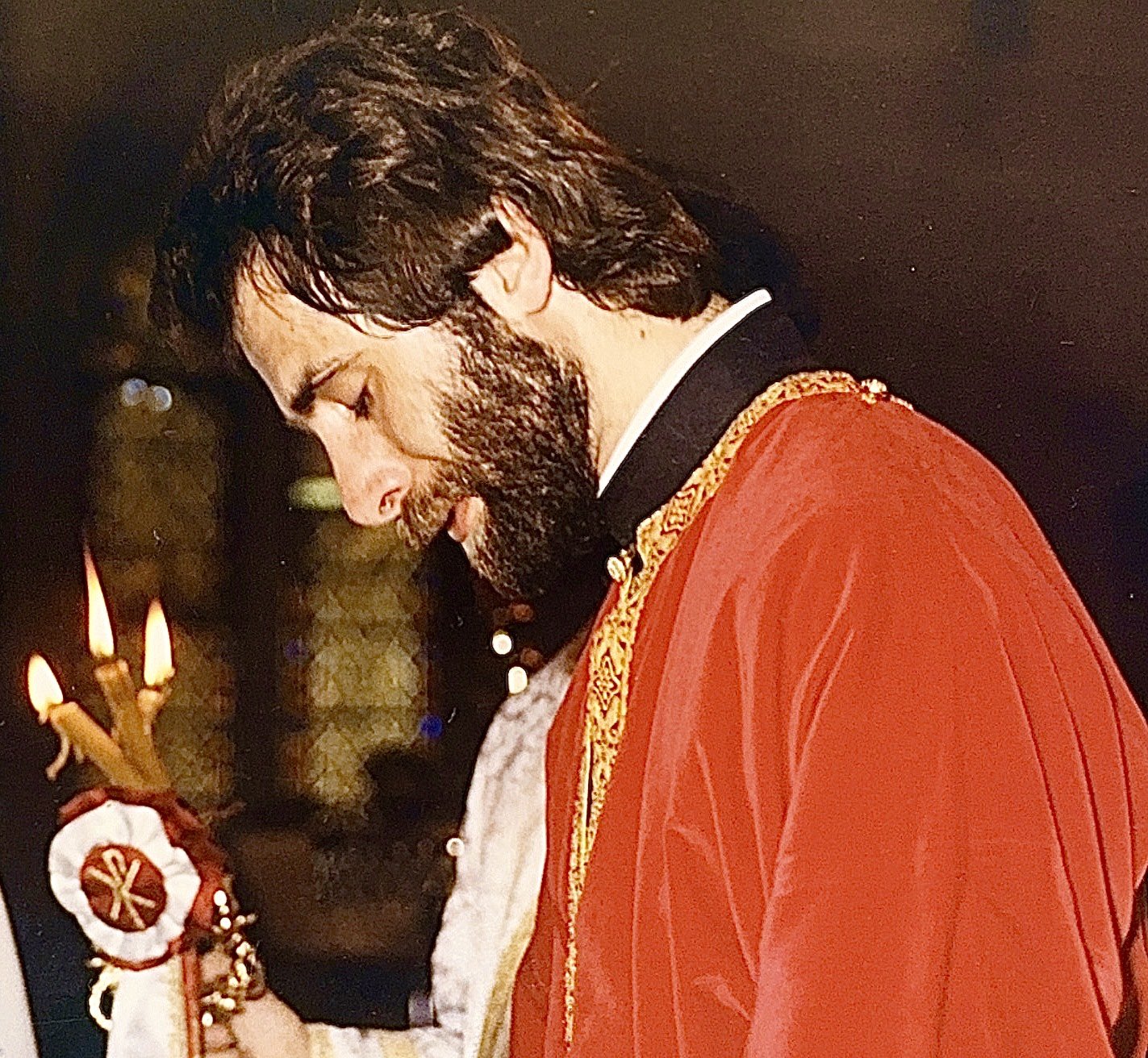
All five who remained were ordained. Of these five, one would later ask to be relieved of their Holy Orders. This fellow was me. A decision, I must also confess, one cannot ever rightly find peace with. Particularly, if you belong to a believing community with entrenched religio-cultural values which are parts of each other. Yet, there is no escaping the fact that I took my hand off the plough and I will one day have to give an account to my Lord. Though I have referred to myself as a theologian, I do not wish to be known as one. The word alone, theologos (“one who speaks of God”), terrifies me for its implications and for the truth that I have every day fallen short of the mark. I am, indeed, the very least of the brethren. It is enough to ponder on the grace and mercies of our Creator. To be occasionally filled with an overwhelming awe—and to find opportunities to share this awe of the “tremendous mystery” with our neighbour. During our long walks down by the edge of the Pacific, that I might keep in practice, our beautiful husky, Mishka, will listen patiently as I ‘sermonize’ to her on the vitalness of endurance. Other times I will preach to the fish and the rocks and the trees, for all things are moving towards their transfiguration. This has now been my ‘captive’ congregation since the time of my exile. The photo which I have posted here after much toing and froing, I had not been able to hold for a long time. It is fine now. I have come to be grateful for that hour. I have understood a lot more of that journey in the ensuing years. And why it was necessary for me to cross this path. In spite of that, good things are never too far away for as the Scriptures say: “And we know that in all things God works for the good of those who love him, who have been called according to his purpose” (Rom. 8:28).

MG Michael Family Archives

The Mysterious Little Christmas Tree

Kiama-Gerringong, NSW

For you beautiful heart whoever you might be

Do not forget to show hospitality to strangers, for by so doing some people have shown hospitality to angels without knowing it.” (Heb. 13:2)

“Everything in this world has a hidden meaning.” (Nikos Kazantzakis)

“There are millions of homeless people in the world because humanity does not have a proper conscience.” (Mehmet Murat ildan)

“Sometimes it's easy to walk by because we know we can't change someone's whole life in a single afternoon. But what we fail to realize it that simple kindness can go a long way toward encouraging someone who is stuck in a desolate place.” (Mike Yankoski)

There are moments in our lives that have a deeply moving effect on us. They manifest a change in us. We normally remember these moments for the remainder of our lives. They can be sad experiences brought about by some devastating event or they can be joyful happenings which we might normally recollect as anniversaries through the passing of the years. Then there are  those “moments” which can leave us spellbound and spine-tingling with awe. Think back, if you will, to some of those occasions. Perhaps it was at the Louvre in Paris when you first came ‘face-to-face’ with Leonardo da Vinci’s famous ‘Mona Lisa’. Or maybe it was that time in London’s National Gallery when you saw Rembrandt’s ‘Belshazzar’s Feast’. Something inside of you is viscerally shifted, your response to such artistic human endeavours touches you to the core. And what of such places which have been flamed by the divine: the Temple Mount; the Church of the Holy Sepulchre; the Blue Mosque; the Bodh Gaya. So then it can become too easy [or habitual] to dismiss those occasions which might fill us with a different sort of awe, and to oftentimes pass them over thinking, yes, quite lovely, but way too mundane.

Source: https://www.kiama.nsw.gov.au/Council/Projects/Hindmarsh-Park-upgrade

Today, on my early morning walk down by Kiama’s scenic harbour in the company of one excitable Mishka, the canine member of our family, we came across a profoundly moving sight. In a rarely used bus shelter on the lower end of Hindmarsh Park,[1] what I saw brought me to tears and what is more, touched me no less than those times when I stood in awe before the sublime artistry of our great masters. What did we see? In the shelter were two suitcases and a blue trolley with an umbrella strapped to its side. Through one of the side glass panels my eye caught a shimmering object on the bench. It was a small plastic silver star. It was placed there with a purpose as the surrounding evidence would show. Below the star itself, was a colourful [but broken] toy windmill. Little pieces of twig were arranged strategically around the windmill’s wooden blades. Attached to the twigs were a variety of shells as ornaments. All this industry was laid out on the top half of the bench. Clearly, this was a Christmas tree. I wondered which sensitive heart was behind such an honest creation. What might have been this person’s story? My eyes welled up as other parables of a similar sort came to me. I thought of the symbolism of what I had just seen and of the significance of such an act by someone who had obviously lost a lot somewhere along the way. I reflected on my comfortable life and my home which lacks nothing. And maybe once or twice before I had felt such raw and brutal proximity to that origin myth and of the implications of the exile from Paradise [if you still believe in such things].[2] There is much I would have liked to have said to this ‘angel’. To have embraced them and for my tears to have spoken to their heart when my words would only have meant something if I was to hold them back anchored to my tongue. I was defeated by the untold grace of this unexpected encounter. This work of angelic inspiration poured from the purest gratitude is reminiscent of the “widow’s offering” who gave all she had from her poverty (Mark 12:41-44). And no less magnificent in its intent than the breathtaking creations we come across in the great museums of the world.  I was dwarfed by this humble little Christmas tree. And religion, at least of the rubric kind, had little to do with it. It was the ‘tremendous mystery’ of the hour.

Postscript

The next day, on the afternoon of the 14th, Mishka and I were again out walking down at the harbour, which on our return will take us back past Hindmarsh Park. As we approached the bus shelter which the day before with its mysterious little Christmas tree, had opened up that flood of emotions in my heart, I could see something circular, like a bright large orange ball. Now, I wondered, what could that be? The closer Mishka and I got to the bus shelter, the one which housed this mysterious little Christmas tree, it became clearer that the bright large orange ball was in fact a small furry head. I once again peered through the glass window. It was a teddy bear! I smiled. It was perched on the window’s ledge watching over the Christmas tree with its hands outstretched as if in the orans position, like a ‘platytera’ on a half-dome. At the same time its eyes, which were still intact despite the unmissable signs of age on the body, were also surveying, protecting the bags and blue trolley from the day before. On the way back to the car, Mishka and I paused. We turned to look at that fantastic spot from where only minutes ago we had walked past. I understood the manger, or better still, the creche in the traditional Nativity imagery in yet another light and felt grateful beyond words to this travelling soul. Saint Seraphim of Sarov, Leo Tolstoy, and all the others, and those who came before, the Prophet Isaiah, and after them, Gwendolyn Brooks, were right, of course. Real beauty which is neither artificial, nor affected, is more often hidden, and waiting to be discovered, where you might least expect it. I remember Rembrandt and am struck by that spellbinding awe, but this recall does not comfort my spirit when it is aching. On the other hand, this ‘wandering angel’, already, is comforting my night pains and revealing insights into another, more enduring splendour.


[1] https://library.kiama.nsw.gov.au/History/Explore-Kiamas-Past/Local-history-stories/Hindmarsh-Founding-Orphans

[2] I use the term “myth” here in a similar way to Carl Jung’s conventional interpretation: https://www.youtube.com/watch?v=1hcogiUUNnM

Then there are those periods in our life

Tempe, Arizona

In Shellharbour, NSW, one afternoon in 2018 waiting at school for my children. Courtesy: Michael Family archives.

In Shellharbour, NSW, one afternoon in 2018 waiting at school for my children. Courtesy: Michael Family archives.

Then there are those periods in our life when it would seem are reserved for the darkest thunderstorms. And the heavy rains keep coming. Most of us can look back on our lives, especially as we move deeper into middle age and pinpoint three or four of the toughest times. If we could survive those trials then surely we can survive the present ones and those yet to come. It is critical if we should feel ourselves becoming overwhelmed that we look back on those testing weeks, and months and sometimes even years, to see how we pulled through and what lessons can be drawn. Life is indeed a series of ‘ups and downs’ with the ups ever fleeting while the downs have a tendency to linger. This is why I will often refer to one of my favorite maxims gleaned from the desert dwellers that our existence is one of “joyful sorrow”.[1] I have also through my own ups and downs found great comfort in the words of Saint Paul:

“For I consider that the sufferings of this present time are not worth comparing to the glory that is to be revealed to us” (Rom. 8.18).

In recent months it has been one of those periods for me. They have been emotionally and physically difficult. I have had to navigate five deaths each one holding a specific significance in my life with three of these opening up an abyss of triggers affecting my mental well-being. Physically I was once more experiencing severe pain owing to a dental procedure to do with my jaw. We witnessed our eldest boy dealing bravely with having his boyhood dream taken away from him. Nepotism is such a terrible thing. A fortnight ago I also left my beloved UOW to go into possible retirement. A self-identity crisis [and I’ve had a few of these] are not good at any age. And in recent weeks I was preparing for my flight to the United States to catch up with the children and Katina. A trip I was greatly anticipating. Except I now have a fear of flying after almost dropping out of the sky and into the Caribbean on board a small Cessna a few years ago. All these things started to gradually overwhelm me. My blood pressure too rose dangerously which can give rise to other complications. I wept but these were not always the tears of prayer. If truth be told I was suffering in ways not dissimilar to earlier dark times, despite my being older and I would hope a little wiser.

The details behind these recent trials do not matter. They remain peripheral to this entry. For you can be certain that someone somewhere is battling with darkness more impenetrable than our own. Like my beloved Aunt Stella whose entire family was wiped out within the twinkling of an eye or Leo who everyday educated me mowed down riding his motorcycle by a drunkard who until he died one morning could only speak by flicking his eyelids. You try to reason through all of this? You either risk losing your faith or going mad. There are no shortcuts either. You cannot go round suffering. You confront it at the center and by sheer force you compel yourself forward. It can be brutal. It can be ugly. But it is the only way, and it is worth the struggle to get to the end of the race. It is the one true place where we discover our name. There is light on the other side and it is there waiting our entering. “I will fear no evil, for You are with me; Your rod and Your staff, they comfort me” (Ps. 23:4).

But I would like to share with you how this storm too was pushed through that I can now sit down and write these few paragraphs in the relative calm of our little apartment in Tempe, Arizona. I would like especially for the next few minutes to resonate with my younger readers. One of the deaths I spoke of above had in fact to do with the tragic loss of a beautiful young boy. And this is mourning beyond words. Together with the deaths of the bishop who had ordained me into the priesthood my first father confessor Archbishop Stylianos with whom after years of estrangement I had not reconciled and weeks later the sudden passing away of one of my dearest friends our national poet, Les Murray, brought mortality directly into my heart and it did wage war against me one more time. I was taunted amongst other doubts that my own life had been of little if any merit and that for the greater part my few talents had been wasted.

In dealing with the above experiences which came parceled in one hard fist and which not surprisingly released the ‘black dog’ together with an exacerbation of my OCD invariably following behind like a beast in pursuit of its prey, I went through a series of extreme emotions and temptations. And so it happened during these ‘visitations’ that a number of life’s sufferings and impulses arrived closed together: the raw impact of death, the specter of hopelessness, the unbearable thought of the loss of grace, lost opportunities at reconciliation, the weightiness of an overriding guilt, hurting through the unfair treatment meted out to my eldest son, the onset of a melancholia, frustration and anger, the crisis of identity, and strong physical pain. I had confronted such distresses in the same battlefield before but I was younger and more vigorous in spirit. The closest and the most terrifying yet, even more potentially devastating for me, the agonizing aftermath of my leaving the priesthood and the technical issues behind our multiple attempts of trying to save my doctorate which would at times quite literally delete line by line before our eyes. I do not wish for anyone to experience anything of this which was unremitting in its persistence and seemed to me an almost catastrophic situation that would not come to an end. During these times the soul does struggle in its efforts to pray. Do not be alarmed if this is happening to you. It is a natural phenomenon as the ideal situation for prayer is peace, and tribulation is not a peaceful condition. Christ Himself labored in prayer during His most difficult hours on earth: The Agony in the Garden of Gethsemane (Lk. 22:43f.). It is vital to persevere in our own ‘garden of the soul’.

So how can one deal with these multiple attacks? If there is a general formula I would like to know. There is no such thing and we each walk into these green fires on our own, and one way or another, we emerge different beings to what we were the hour before. There is no ‘general formula’ except for tears and the disquisition of whether to live or die. You can choose to live or die in a multitude of ways. This is because each one of us carries single life experiences into the ‘fire’: a present informed by a different past; a different set of values and beliefs even though we might belong to similar faith communities; we are of different ages and significantly of varying degree of resilience. In the extreme, and there are those amongst us who have been to this frightful place, suicidal ideation infiltrates our waking moments right through to our sleepless nights.[2] Yet, there is common ground, even if by virtue of our shared elements of flesh and blood. There is a ‘soft’ intersection of experiences where the crux of the human condition is at its most visible and sensible. It could be that place which Frankl has memorably called ‘man’s search for meaning’[3] or “the will to life” described by Schopenhauer as the fight for self-preservation.[4] For those who move and breathe within a belief-based community both these great pillars of hope and action can be summed up for example by Saint James’ connection of faith to perseverance through trials (Jas. 1:2f.) or to Buddhism’s teaching of Virya Paramita the perfection of perseverance through courage.[5]

Irrespective of our background or philosophical perspectives what these and other deeply felt insights borne from the observation of humans striving to survive are saying: there is meaning to your life, so will yourself to live.

It is possible, others many before us, have gone through these green fires and have come out alive the stronger and the more compassionate. They practice forgiveness of themselves and towards others. Suffering which never lies can do this to us. Adversity can be our most trusted friend. Blessed are they who mourn. It has been done before, and if we should persevere but another day, this too, it will pass.


Postscript Yesterday morning after I dropped off Eleni at summer school classes, I took my long walk down Southern Ave., Tempe. The heat would be unbearable if not for the fact it doesn’t ‘burn’ you like the summer scorchers back home in Australia. The forecast for today is 110 ℉! My ritual has been to take an initial short break at the Back East Bagels for a light morning breakfast. Then the much longer trek retracing my steps back past the school left into Rural Rd., to spend the next three hours at Tempe Public Library. I love spending time in libraries. Cicero well compared libraries to gardens. This evening George is leaving with his Arizona rugby teammates for Denver, Colorado, to contest the Regional Cup Tournament (RCT). Tomorrow morning Eleni and I will be flying out to join him to catch some of the round games.

And yet this impromptu postscript had another reason. On my way to the library yesterday turning left into Rural in the corner of the road my eyes caught sight of a little bird lying motionless in a ditch. It could have been a House Finch. I am not sure. It was dead still. It faced upwards its wings folded around its brown breast like a cloak. Eyes and mouth closed. It might have died for the lack of water. I don’t know. We can never know the whole truth. Not even about ourselves. I wept like a child. Is this normal? Do these things happen to you as well? I thought of the thousands of men and women and children who would on that day likewise die anonymously in the world whether of thirst or famine, homeless somewhere on a city street, or by themselves in a hospital bed. Anonymously and alone like this little bird which, too, had a history and stories to tell.

[1] https://pittsburghoratory.blogspot.com/2012/05/joyful-sorrow-compunction-and-gift-of.html

[2] https://www.youtube.com/watch?v=7CIq4mtiamY

[3] https://www.psychologytoday.com/us/blog/hide-and-seek/201205/mans-search-meaning

[4] https://en.wikipedia.org/wiki/Will_to_live

[5] https://www.learnreligions.com/virya-paramita-perfection-of-energy-449709

These are your terrifying moments of cleansing

Shellharbour, NSW

What to do when you want to pray but cannot? When you would wish for your heart to become ‘dumb’ and turn to stone if only for a short hour that the pain could go away. This terrible nauseous pain which goes by many names and which in reality answers to none. But, no, your heart must never turn to stone, not even for an hour, for that would be an hour where you would stop loving, where you would lose all capacity to forgive or ask to be forgiven. No, you must never ask for your heart to turn to stone, not even for an hour. Not even for the time it takes to suck in your breath. And so, suffer all of the calumny, the blood-letting rejection, and in the night close your eyes to the horror vacui of your rooms. As tempting it might be to stop the pain, to dry up the flow of tears, to wipe away the bad memories which become increasingly beastly by the minute, do not ever wish for your heart to turn to stone. What to do when you want to pray but cannot? When you would wish for your heart to become ‘dumb’ and turn to stone if only for a short hour that the pain could go away.

“Self-portrait” in Paphos, Cyprus, 2016. MG Michael Family Archives.

“Self-portrait” in Paphos, Cyprus, 2016. MG Michael Family Archives.

But this pain like an old guilt does not easily go away. Both have changed you and for a season you will only exist and move about in the shadows. That's why think on those whom you might have comforted on their deathbeds when you whispered into ears straining for light [for their eyes had now shut]: “Let go, it is good, now is the time to leave.” Remember the unmerited grace you have received which has covered the multitude of your iniquities. Be grateful there is water in your home and you will not thirst tonight when your throat burns. Get up, wash your face, and write a loving message to your enemy. Like an Armenian flute suspended over the Syrian Desert. In a little while feel the heavy load upon your heart start to lift, even for a moment. And for now that is enough. Begin again. Like the free-flow juice pressed and crushed from the grape. These are your terrifying moments of cleansing, one way or another, you have earned them. Do not waste them.

The shadows, too, for a while, do not be afraid of them. They would not exist if the light was not after you. It is after you. You cannot outrun it. These prayers have nothing to do with the rubrics as does this pain which has little to do with the nerve fibers. There are the spaces of the entering into your becoming, ​the unveiling of your true self. From here, out of these all-consuming green fires, you will step out to greet the world.