
On the Overwhelming Power of Forgiveness 

Do not judge, and you will not be judged. Do not condemn, and you will not be condemned. Forgive, and you will be forgiven. (Lk. 6:37)

He who is devoid of the power to forgive is devoid of the power to love. There is some good in the worst of us and some evil in the best of us. When we discover this, we are less prone to hate our enemies. (Martin Luther King, Jr.)

Absolutely nothing will help us if we are not lenient toward the weaknesses of men and forgive them. For how can we hope that God will forgive us if we do not forgive others? (St. Nikolai Velimirovich)

When we are able to see the suffering in him or her, and see that that person is a victim of his own suffering, then it's easy to forgive. Recognize the suffering. Understand the suffering. And by having the desire to help that person to suffer less, you will be able to forgive very easily. (Thich Nhat Hanh)


To forgive, to truly forgive, to wipe the slate completely clean, is beyond the capacity of most of us, if only because we are creatures made of memory. From this arises an old, oft-repeated truth: I can forgive, but I cannot forget. And yet, we do surely try. On those occasions when we might succeed, there is a joy that settles upon the heart, a peacefulness, something not easily described. Call it a lightness of being, or even an acceptance of the foibles of the human condition to which we are all subject. When I look back on my own life, I find that some of my deepest joys and my most enduring hurts have to do, above all, with the asking or the giving of forgiveness. We often read that asking for forgiveness is harder than offering it. I have found, however, that both of these life-changing charisms are equal in measure, though each demands a different kind of humbleness.

To ask the other for forgiveness is harder in the first instance because it will normally mean that we must make the first move, and so we put ourselves in an extremely vulnerable position. If this action of opening our heart to another is rejected it can deliver a mental pain to rival, or in fact be worse, than a suffering we might feel in the flesh. Particularly when the rejection comes from someone we have loved. And often in the cruellest form of all: silence. Such an experience can unleash a devastating range of emotions, from a sense of worthlessness to having one’s integrity and intentions called into question. How, then, does one respond to such a brutal rejection? The pain if it be possible is compounded, if we should happen to hold a theology that will see in the other the very Image and Likeness of God.

There is, needless to say, no simple answer but only what our own hearts reveal to us. One thing we must not do is allow another, whose heart does not wish to embrace ours, to extinguish our spirit. Our souls are far greater and infinitely richer in their potential than any hard rejection we might face. To dwell on this truth alone is to make room for divine providence to take its course. At the same time, we can never know what tomorrow may bring, even the joyous possibility of reconciliation. Compassion never ceases to amaze, for even the greatest of enemies have, in many instances, found their way back to each other. What has brought me comfort is carrying the other’s name into prayer. Admittedly, after a strong struggle, that name grows sweet, until the pain itself is almost forgotten. There is a mistake many of us have made, and it is a compulsion that given our angst is not difficult to fall into. We try to get the other to bend their compassion towards us by hammering repeatedly on their door when they have made it clear they have shut us out. By continuing to ‘knock’ we not only do an additional harm to ourselves but also to the other whose time has not yet come. It pulls us further into our own despair, and it hardens the heart of the other. Let us make our peace with a sincere and genuine spirit and then turn towards the souls who love us and see in us not only our heaven-sent gifts, but also that which is common to us all, our brokenness and need for acceptance.

Now we come, let us say, to the flip side of the coin. And for a large number, this has proven the more difficult, if only because once we forgive, the memory of the injustice committed against us remains. Once more, in such matters, we can only speak from experience and learn best we can from the wisdom writings of those who have gone before us. To forgive demands the giving of the benefit of the doubt for a trust has normally been broken, but also the practice of other-compassion and an outpouring of love. This forgiveness is rarely easy when we are young. Early in life, lacking a broader existential perspective, we tend to see the world in stark polarities. We have not yet come to a nuanced understanding of the complexities and contradictions of the human condition. Concepts such as loyalty and betrayal, yes, undeniably important, assume almost mythical proportions when life is viewed through a murky lens.
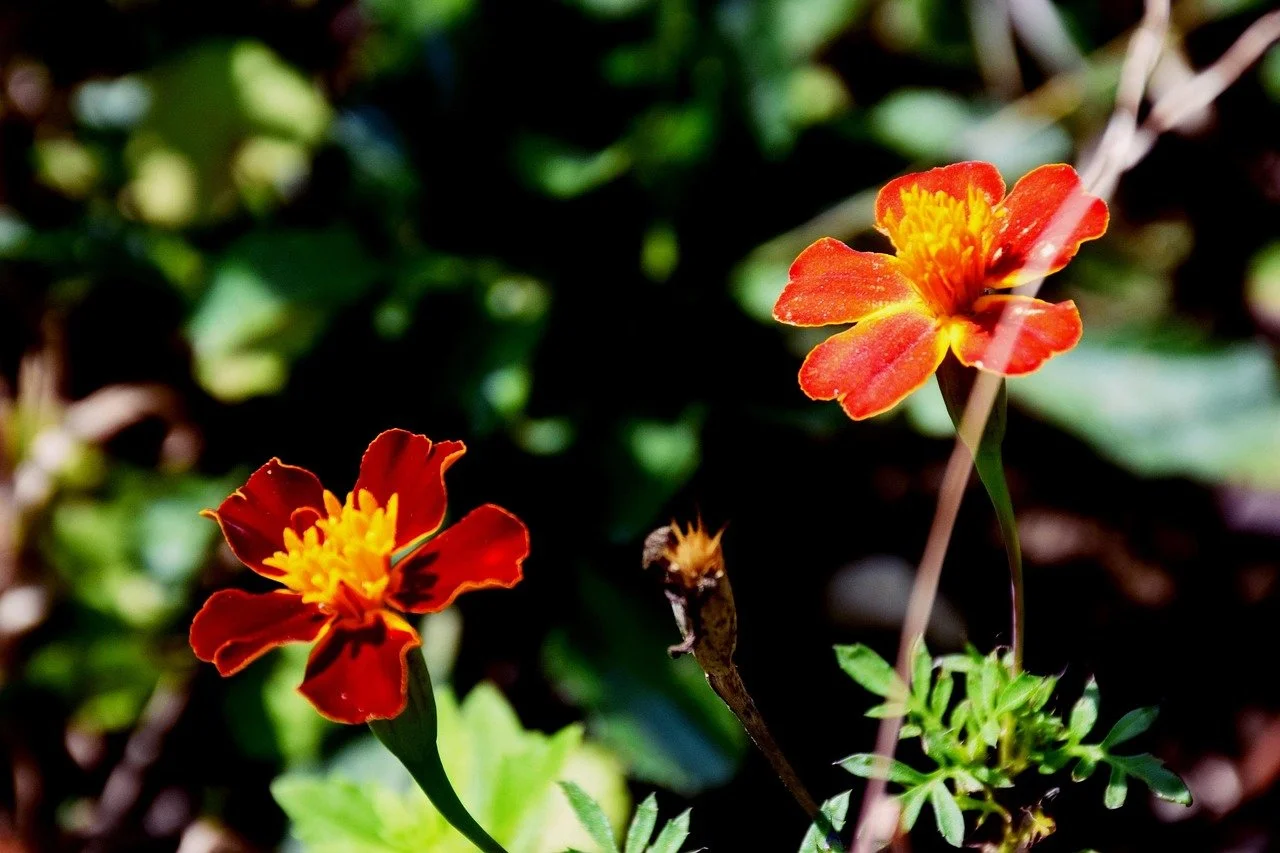
As we grow into our middle and later seasons of life, a precious awakening occurs, like the shock at suddenly seeing the iridescent shine on a drake’s head or the exhilaration of being introduced to Bruckner’s symphonies for the first time. We come to the self-realisation that we, too, have missed the mark. Jung would speak in terms of “individuation” and of coming face-to-face with our shadow. We have all sinned and fallen short of the glory of God. Looking at the accusers who brought the woman caught in adultery before Him, the God-Man responds: “Let any one of you who is without sin be the first to throw a stone at her” (Jn. 8:7). And who amongst us would claim to have never been a prodigal or has not considered pulling the arm back before casting the stone? Not only in biblical but also in those inspirational Levinasian terms, the “Other” is my salvation and not my hell. We are all of us, boats in the ocean, with rust and brine on the waterline.

Put in more earthly language, none of us is perfect. Though we might sometimes dare to convince ourselves that we are at least a little more perfect than the other. And who has not? So, then, forgiving the other for misdemeanours that we ourselves could be guilty of, is not as impossible as it once could have been. In this way, too, bringing the other to prayer, and allowing time to do its work, can become a great liberation for the soul. This is not to idealise forgiveness nor to trivialise the hurt that has been done; to forgive a grievous wrong demands an act of moral courage. Yet, in that one act alone, power is paradoxically restored to the one who forgives. This is the charism of the transformative power of love, for it endures, it does not fracture nor can it be broken, like a young oak tree that grows to become “windproof” as it matures. By far there are more gentle and compassionate people in the world than those who would will us harm. Let us allow for the possibility that we are acting in good faith.

Forgiveness is not a question of prescribed rubrics, in either its asking or its giving. It remains a profoundly personal act. Nor is it always a decision of a single moment. In any case, it cannot be hurried, especially when deep trauma is involved. Boundaries may need to be initially set. There is no “one size fits all” formula, any more than there is a single eye colour. What remains essential, if forgiveness is what we seek, is prayer, patience, and the belief that the potential for the redirection of another soul is rarely absolutely lost. Over time, forgiveness draws us further into those tremendous realms of self-sacrificial love revealed by Christ on the Cross, who forgives even as He is being executed (Lk. 23:34). From this mystical place, the thinnest divide between divine and human, the greatest graces and mysteries will flow. 

Finally, if I may add a personal reflection drawn from my own experience and from listening to others during my earlier vocation as a spiritual advisor. Asking for forgiveness liberates the soul from its guilt and resentment, and allows for the heart to be loved again. As much as we need creativity to survive, we also need to practise forgiveness so that we may live our humanness to its fullest expression. And for those who are able to forgive, this one act of grace alone, renouncing the claim that they once held over the other, can reverberate across generations. It can even save a brother or sister from death, for we know there are many ways in which one can die. It will foster beautiful friendships, or completely destroy them should we hold on to the bitterness. Rocks can crack bit by bit to then fall apart under the stress weathering of the sun. And such is the power granted to us from our Maker (or, indeed from the Universe) that with a single word—yes— (or, no) we can alter the direction of the future. The temptation is to forgive yet still deny access to those we have forgiven. For those of us who are members of the community of believers, we are asked to discern what it means that God Himself remains forever open to the cry of our lament and requests for mercy.

We were in search of our identity

I have increasingly wondered what it would be like, how wonderful beyond the conception of words, to have in the one room towards the closure of one’s life, all your adversaries—I have never liked the word enemy. To reveal to each and every one of these souls that without their presence, the puzzle would not be complete. Even, if as Seneca has said, we are injured most by what we do not expect. I say to myself even during the excruciating hours, I would not be who I am today without you. To embrace these adversaries tightly and to whisper into their ear which too has been aching: “We were in search of our identity. I have always loved you.” In the panic of this pursuit we enter into the realms of brokenness. Wounded we are all in need of healing. To then paraphrase those great words which on this earth will bring us closer to the divinity than most any other: “All is now forgiven. We knew not what we did.” The adversary is a good teacher. If not for you, this prayer that I am now setting down, would not have been born. To weep those melliferous tears of pure joy before it all ends in this room where the great peace will now at last begin to reign. I wonder how much of the pain we have suffered came down to a misunderstanding? Or that an hour would not have reconciled us the one to the other. All else outside the realm of love and forgiveness, when that final moment comes—and it will come to us all, was possessed of little enduring value or meaning. Release the other from their hurt. Do not leave them frozen like a deer caught in headlights.

Then there are those periods in our life

Tempe, Arizona

In Shellharbour, NSW, one afternoon in 2018 waiting at school for my children. Courtesy: Michael Family archives.

In Shellharbour, NSW, one afternoon in 2018 waiting at school for my children. Courtesy: Michael Family archives.

Then there are those periods in our life when it would seem are reserved for the darkest thunderstorms. And the heavy rains keep coming. Most of us can look back on our lives, especially as we move deeper into middle age and pinpoint three or four of the toughest times. If we could survive those trials then surely we can survive the present ones and those yet to come. It is critical if we should feel ourselves becoming overwhelmed that we look back on those testing weeks, and months and sometimes even years, to see how we pulled through and what lessons can be drawn. Life is indeed a series of ‘ups and downs’ with the ups ever fleeting while the downs have a tendency to linger. This is why I will often refer to one of my favorite maxims gleaned from the desert dwellers that our existence is one of “joyful sorrow”.[1] I have also through my own ups and downs found great comfort in the words of Saint Paul:

“For I consider that the sufferings of this present time are not worth comparing to the glory that is to be revealed to us” (Rom. 8.18).

In recent months it has been one of those periods for me. They have been emotionally and physically difficult. I have had to navigate five deaths each one holding a specific significance in my life with three of these opening up an abyss of triggers affecting my mental well-being. Physically I was once more experiencing severe pain owing to a dental procedure to do with my jaw. We witnessed our eldest boy dealing bravely with having his boyhood dream taken away from him. Nepotism is such a terrible thing. A fortnight ago I also left my beloved UOW to go into possible retirement. A self-identity crisis [and I’ve had a few of these] are not good at any age. And in recent weeks I was preparing for my flight to the United States to catch up with the children and Katina. A trip I was greatly anticipating. Except I now have a fear of flying after almost dropping out of the sky and into the Caribbean on board a small Cessna a few years ago. All these things started to gradually overwhelm me. My blood pressure too rose dangerously which can give rise to other complications. I wept but these were not always the tears of prayer. If truth be told I was suffering in ways not dissimilar to earlier dark times, despite my being older and I would hope a little wiser.

The details behind these recent trials do not matter. They remain peripheral to this entry. For you can be certain that someone somewhere is battling with darkness more impenetrable than our own. Like my beloved Aunt Stella whose entire family was wiped out within the twinkling of an eye or Leo who everyday educated me mowed down riding his motorcycle by a drunkard who until he died one morning could only speak by flicking his eyelids. You try to reason through all of this? You either risk losing your faith or going mad. There are no shortcuts either. You cannot go round suffering. You confront it at the center and by sheer force you compel yourself forward. It can be brutal. It can be ugly. But it is the only way, and it is worth the struggle to get to the end of the race. It is the one true place where we discover our name. There is light on the other side and it is there waiting our entering. “I will fear no evil, for You are with me; Your rod and Your staff, they comfort me” (Ps. 23:4).

But I would like to share with you how this storm too was pushed through that I can now sit down and write these few paragraphs in the relative calm of our little apartment in Tempe, Arizona. I would like especially for the next few minutes to resonate with my younger readers. One of the deaths I spoke of above had in fact to do with the tragic loss of a beautiful young boy. And this is mourning beyond words. Together with the deaths of the bishop who had ordained me into the priesthood my first father confessor Archbishop Stylianos with whom after years of estrangement I had not reconciled and weeks later the sudden passing away of one of my dearest friends our national poet, Les Murray, brought mortality directly into my heart and it did wage war against me one more time. I was taunted amongst other doubts that my own life had been of little if any merit and that for the greater part my few talents had been wasted.

In dealing with the above experiences which came parceled in one hard fist and which not surprisingly released the ‘black dog’ together with an exacerbation of my OCD invariably following behind like a beast in pursuit of its prey, I went through a series of extreme emotions and temptations. And so it happened during these ‘visitations’ that a number of life’s sufferings and impulses arrived closed together: the raw impact of death, the specter of hopelessness, the unbearable thought of the loss of grace, lost opportunities at reconciliation, the weightiness of an overriding guilt, hurting through the unfair treatment meted out to my eldest son, the onset of a melancholia, frustration and anger, the crisis of identity, and strong physical pain. I had confronted such distresses in the same battlefield before but I was younger and more vigorous in spirit. The closest and the most terrifying yet, even more potentially devastating for me, the agonizing aftermath of my leaving the priesthood and the technical issues behind our multiple attempts of trying to save my doctorate which would at times quite literally delete line by line before our eyes. I do not wish for anyone to experience anything of this which was unremitting in its persistence and seemed to me an almost catastrophic situation that would not come to an end. During these times the soul does struggle in its efforts to pray. Do not be alarmed if this is happening to you. It is a natural phenomenon as the ideal situation for prayer is peace, and tribulation is not a peaceful condition. Christ Himself labored in prayer during His most difficult hours on earth: The Agony in the Garden of Gethsemane (Lk. 22:43f.). It is vital to persevere in our own ‘garden of the soul’.

So how can one deal with these multiple attacks? If there is a general formula I would like to know. There is no such thing and we each walk into these green fires on our own, and one way or another, we emerge different beings to what we were the hour before. There is no ‘general formula’ except for tears and the disquisition of whether to live or die. You can choose to live or die in a multitude of ways. This is because each one of us carries single life experiences into the ‘fire’: a present informed by a different past; a different set of values and beliefs even though we might belong to similar faith communities; we are of different ages and significantly of varying degree of resilience. In the extreme, and there are those amongst us who have been to this frightful place, suicidal ideation infiltrates our waking moments right through to our sleepless nights.[2] Yet, there is common ground, even if by virtue of our shared elements of flesh and blood. There is a ‘soft’ intersection of experiences where the crux of the human condition is at its most visible and sensible. It could be that place which Frankl has memorably called ‘man’s search for meaning’[3] or “the will to life” described by Schopenhauer as the fight for self-preservation.[4] For those who move and breathe within a belief-based community both these great pillars of hope and action can be summed up for example by Saint James’ connection of faith to perseverance through trials (Jas. 1:2f.) or to Buddhism’s teaching of Virya Paramita the perfection of perseverance through courage.[5]

Irrespective of our background or philosophical perspectives what these and other deeply felt insights borne from the observation of humans striving to survive are saying: there is meaning to your life, so will yourself to live.

It is possible, others many before us, have gone through these green fires and have come out alive the stronger and the more compassionate. They practice forgiveness of themselves and towards others. Suffering which never lies can do this to us. Adversity can be our most trusted friend. Blessed are they who mourn. It has been done before, and if we should persevere but another day, this too, it will pass.


Postscript Yesterday morning after I dropped off Eleni at summer school classes, I took my long walk down Southern Ave., Tempe. The heat would be unbearable if not for the fact it doesn’t ‘burn’ you like the summer scorchers back home in Australia. The forecast for today is 110 ℉! My ritual has been to take an initial short break at the Back East Bagels for a light morning breakfast. Then the much longer trek retracing my steps back past the school left into Rural Rd., to spend the next three hours at Tempe Public Library. I love spending time in libraries. Cicero well compared libraries to gardens. This evening George is leaving with his Arizona rugby teammates for Denver, Colorado, to contest the Regional Cup Tournament (RCT). Tomorrow morning Eleni and I will be flying out to join him to catch some of the round games.

And yet this impromptu postscript had another reason. On my way to the library yesterday turning left into Rural in the corner of the road my eyes caught sight of a little bird lying motionless in a ditch. It could have been a House Finch. I am not sure. It was dead still. It faced upwards its wings folded around its brown breast like a cloak. Eyes and mouth closed. It might have died for the lack of water. I don’t know. We can never know the whole truth. Not even about ourselves. I wept like a child. Is this normal? Do these things happen to you as well? I thought of the thousands of men and women and children who would on that day likewise die anonymously in the world whether of thirst or famine, homeless somewhere on a city street, or by themselves in a hospital bed. Anonymously and alone like this little bird which, too, had a history and stories to tell.

[1] https://pittsburghoratory.blogspot.com/2012/05/joyful-sorrow-compunction-and-gift-of.html

[2] https://www.youtube.com/watch?v=7CIq4mtiamY

[3] https://www.psychologytoday.com/us/blog/hide-and-seek/201205/mans-search-meaning

[4] https://en.wikipedia.org/wiki/Will_to_live

[5] https://www.learnreligions.com/virya-paramita-perfection-of-energy-449709