
On the Overwhelming Power of Forgiveness 

Do not judge, and you will not be judged. Do not condemn, and you will not be condemned. Forgive, and you will be forgiven. (Lk. 6:37)

He who is devoid of the power to forgive is devoid of the power to love. There is some good in the worst of us and some evil in the best of us. When we discover this, we are less prone to hate our enemies. (Martin Luther King, Jr.)

Absolutely nothing will help us if we are not lenient toward the weaknesses of men and forgive them. For how can we hope that God will forgive us if we do not forgive others? (St. Nikolai Velimirovich)

When we are able to see the suffering in him or her, and see that that person is a victim of his own suffering, then it's easy to forgive. Recognize the suffering. Understand the suffering. And by having the desire to help that person to suffer less, you will be able to forgive very easily. (Thich Nhat Hanh)


To forgive, to truly forgive, to wipe the slate completely clean, is beyond the capacity of most of us, if only because we are creatures made of memory. From this arises an old, oft-repeated truth: I can forgive, but I cannot forget. And yet, we do surely try. On those occasions when we might succeed, there is a joy that settles upon the heart, a strong peace, something not easily described. Call it a lightness of being, or even an acceptance of the foibles of the human condition to which we are all subject. When I look back on my own life, I find that some of my deepest joys and my most enduring hurts have to do, above all, with the asking or the giving of forgiveness. We often read that asking for forgiveness is harder than offering it. I have found, however, that both of these life-changing charisms are equal in measure, though each demands a different kind of humbleness.

To ask the other for forgiveness is harder in the first instance because it will normally mean that we must make the first move, and so we put ourselves in an extremely vulnerable position. If this action of opening our heart to another is rejected it can deliver a mental pain to rival, or in fact be worse, than a suffering we might feel in the flesh. Particularly when the rejection comes from someone we have loved. And often in the cruellest form of all: silence. Such an experience can unleash a devastating range of emotions, from a sense of worthlessness to having one’s integrity and intentions called into question. How, then, does one respond to such a brutal rejection? The pain if it be possible is compounded, if we should happen to hold a theology that will see in the other the very Image and Likeness of God.

There is, needless to say, no simple answer but only what our own hearts reveal to us. One thing we must not do is allow another, whose heart does not wish to embrace ours, to extinguish our spirit. Our souls are far greater and infinitely richer in their potential than any hard rejection we might face. To dwell on this truth alone is to make room for divine providence to take its course. At the same time, we can never know what tomorrow may bring, even the joyous possibility of reconciliation. Compassion never ceases to amaze, for even the greatest of enemies have, in many instances, found their way back to each other. What has brought me comfort is carrying the other’s name into prayer. Admittedly, after a strong struggle, that name grows sweet, until the pain itself is almost forgotten. There is a mistake many of us have made, and it is a compulsion that given our angst is not difficult to fall into. We try to get the other to bend their compassion towards us by hammering repeatedly on their door when they have made it clear they have shut us out. By continuing to ‘knock’ we not only do an additional harm to ourselves but also to the other whose time has not yet come. It pulls us further into our own despair, and it hardens the heart of the other. Let us make our peace with a sincere and genuine spirit and then turn towards the souls who love us and see in us not only our heaven-sent gifts, but also that which is common to us all, our brokenness and need for acceptance.

Now we come, let us say, to the flip side of the coin. And for a large number, this has proven the more difficult, if only because once we forgive, the memory of the injustice committed against us remains. Once more, in such matters, we can only speak from experience and learn best we can from the wisdom writings of those who have gone before us. To forgive demands the giving of the benefit of the doubt for a trust has normally been broken, but also the practice of true compassion and an outpouring of love. This forgiveness is rarely easy when we are young. Early in life, lacking a broader existential perspective, we tend to see the world in stark polarities. We have not yet come to a nuanced understanding of the complexities and contradictions of the human condition. Concepts such as loyalty and betrayal, yes, undeniably important, assume almost mythical proportions when life is viewed through a murky lens.
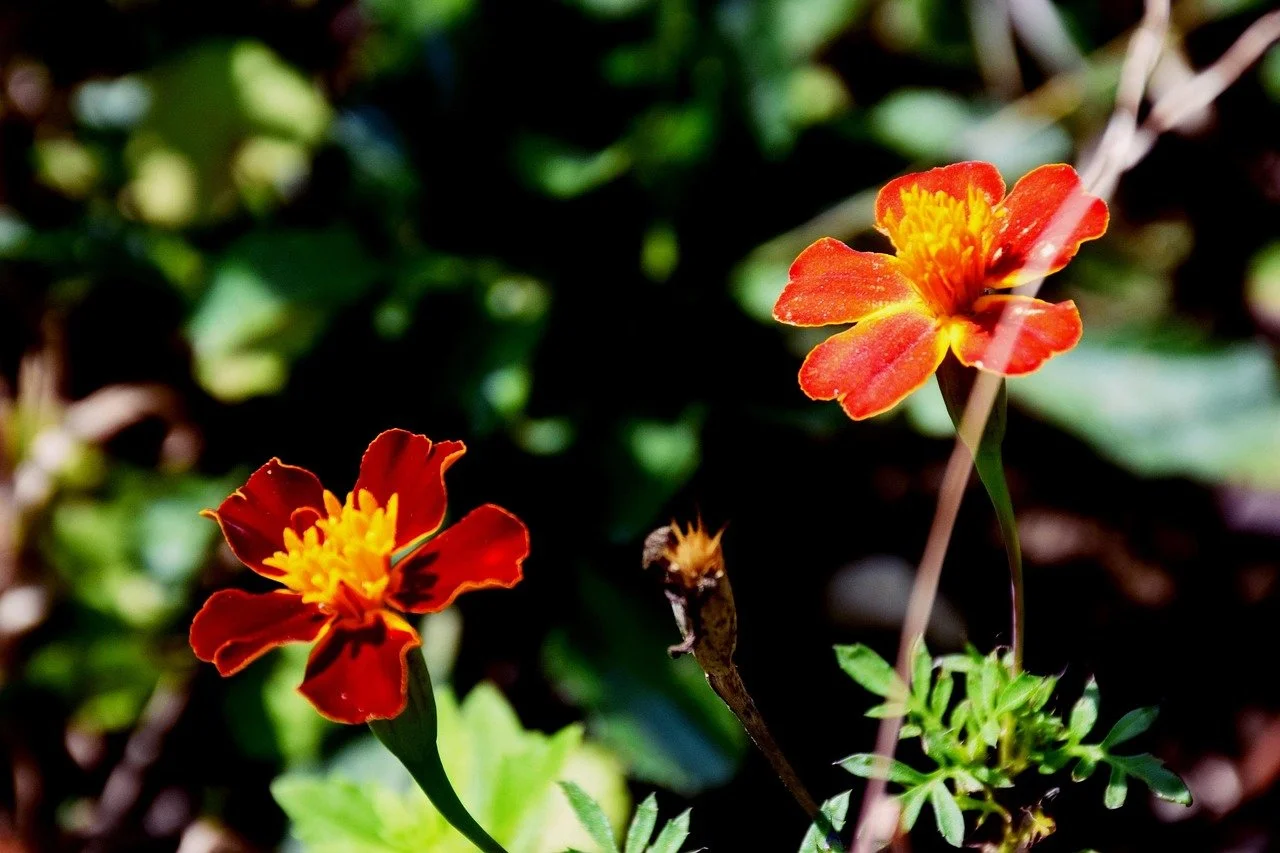
As we grow into our middle and later seasons of life, a precious awakening occurs, like the shock at suddenly seeing the iridescent shine on a drake’s head or the exhilaration of being introduced to Bruckner’s symphonies for the very first time. We come to the self-realisation that we, too, have missed the mark. Jung would speak in terms of “individuation” and of coming face-to-face with our shadow. We have all sinned and fallen short of the glory of God. Looking at the accusers who brought the woman caught in adultery before Him, the God-Man responds: “Let any one of you who is without sin be the first to throw a stone at her” (Jn. 8:7). And who amongst us would claim to have never been a prodigal or has not considered pulling the arm back before casting the stone? Not only in biblical but also in those inspirational Levinasian terms, the “Other” is my salvation and not my hell. We are all of us, boats in the ocean, with rust and brine on the waterline.

Put in more earthly language, none of us is perfect. Though we might sometimes dare to convince ourselves that we are at least a little more perfect than the other! And who has not? So, then, forgiving the other for misdemeanours that we ourselves could be guilty of, is not as impossible as it once could have been. In this way, too, bringing the other to prayer, and allowing time to do its work, can become a great liberation for the soul. This is not to idealise forgiveness nor to trivialise the hurt that has been done; to forgive a grievous wrong demands an act of moral courage. Yet, in that one act alone, power is paradoxically restored to the one who forgives. This is the charism of the transformative power of love, for it endures, it does not fracture nor can it be broken, like a young oak tree that grows to become “windproof” as it matures. By far there are more gentle and compassionate people in the world than those who would will us harm. Let us allow for the possibility that we are acting in good faith.

Finally, if I may add a personal reflection drawn from my own experience and from listening to others during my earlier vocation as a spiritual advisor. Asking for forgiveness liberates the soul from its guilt and resentment, and allows for the heart to be loved again. As much as we need creativity to survive, we also need to practise forgiveness so that we may live our humanness to its fullest expression. And for those who are able to forgive, this one act of grace alone, renouncing the claim that they once held over the other, can reverberate across generations. It can even save a brother or sister from death, for we know there are many ways in which one can die. It will foster beautiful friendships, or completely destroy them should we hold on to the bitterness. I have seen rocks bit by bit crack and fall apart from the pressure of the extreme change of weather. And such is the power granted to us from our Maker (or, indeed from the Universe) that with a single word—yes— (or, no) we can alter the direction of the future. The temptation is to forgive yet still deny access to those we have forgiven. For those of us who are members of the community of believers, we are asked to discern what it means that God Himself remains forever open to the cry of our lament and requests for mercy.

We were in search of our identity

I have increasingly wondered what it would be like, how wonderful beyond the conception of words, to have in the one room towards the closure of one’s life, all your adversaries—I have never liked the word enemy. To reveal to each and every one of these souls that without their presence, the puzzle would not be complete. Even, if as Seneca has said, we are injured most by what we do not expect. I say to myself even during the excruciating hours, I would not be who I am today without you. To embrace these adversaries tightly and to whisper into their ear which too has been aching: “We were in search of our identity. I have always loved you.” In the panic of this pursuit we enter into the realms of brokenness. Wounded we are all in need of healing. To then paraphrase those great words which on this earth will bring us closer to the divinity than most any other: “All is now forgiven. We knew not what we did.” The adversary is a good teacher. If not for you, this prayer that I am now setting down, would not have been born. To weep those melliferous tears of pure joy before it all ends in this room where the great peace will now at last begin to reign. I wonder how much of the pain we have suffered came down to a misunderstanding? Or that an hour would not have reconciled us the one to the other. All else outside the realm of love and forgiveness, when that final moment comes—and it will come to us all, was possessed of little enduring value or meaning. Release the other from their hurt. Do not leave them frozen like a deer caught in headlights.

On trying to become fully human

Tempe, Arizona

Photo by Shahan Khan on Unsplash

Photo by Shahan Khan on Unsplash

Something ‘powerful’ is holding us back. It keeps us from flight. At times it might feel like a dam holding back a great torrent of water. What is more, we feed this hold over us to the extent that years could pass and we remain grounded to its biggest lie. Whatever this obstacle might be, this ‘big lie’, it is known to our hearts alone. Often it is guilt over something we have done, or should not have done. Other times it is regret at an opportunity not taken to express our love, or to ask for forgiveness. This lie invariably tells us we are “not good” and that we do not deserve the “good fortune” incumbent upon others. Many of these instances which stop us from moving forward have to do with our despondency to set things ‘right’. Then the dreadful moment when suddenly confronted with the reality that it is too late. That is, the best of our intentions can no longer be realized. What then? Do we spend the remainder of our lives weltering in self-recrimination? Perhaps a higher providence has seen best for things to fall precisely as they have. “As the heavens are higher than the earth, so are my ways higher than your ways and my thoughts than your thoughts” (Is. 55:9). This was the only way. It was the only way for ‘self-recrimination’ to turn out to be self-revelation. To become fully human, that is, to the extent which such a thing is possible [the ‘unity between head and heart’ Jean Vanier], means to engage with these hard experiences and to live through them. The final destination is what matters. What is done is done. There is the next hour to be lived to its fullest.

Such unbridled joy it does bring to the heart when we happen to come across someone who we sense to be fully human, or at least striving for this end goal. This aspiration towards a human teleology is our spirit’s greatest work. We might discover such people in our everyday encounters “by the well”: our teacher, coach, doctor, grocer, pharmacist, gardener, postal clerk, or cashier worker. If we might borrow from Sufism these are men and women with divinity written on their hearts. Occupation and social status have nothing to do with this luminous heart which is set before us. It is a true humility which recognizes the potential in the other and which possesses a love which moves and breathes outside the margins. Such a human presence is not easily given to cynicism and is slow to judge.

Writing and receiving letters was one of the delights of the ‘bygone age’. Outside the pure enjoyment of the physical processes of pressing out the paper, writing the date on the top left hand corner, putting down the name of the receiver My dear or My dearest…, thinking carefully [‘playfulness’ not excluded] on what you write, and then the final endearments… truly I am yours. And all of it in your own unmistakable scrawl. The letter will often enough, too, carry the unique scent of the sender. What is more the joy of receiving a reply, or a surprise from someone who went to the trouble of looking up your address to then leave his or her ‘biometric’ on the top right hand corner of the envelope. Emails [together with their lifeless emojis] possess little or nothing of such special wonder. Haruki Murakami says it so simply in one of his novels: “How wonderful it is to be able to write someone a letter!”

Little can compare to giving a fellow human being renewed hope, to encourage them through trials, or to inspire in the pursuit of new goals. It is as restorative as saying “I love you”. For love itself, if it be true, takes its first step in the movement of compassion. How can we do this? That is to offer renewed hope to a hurting heart? There are as many ways as there are expressions of love itself. First, the benevolent act of forgiveness. To forgive someone is perhaps the most liberating act for both the giver and the receiver. There are also secret acts of charity where they might most be needed. “Do not neglect to show hospitality to strangers, for thereby some have entertained angels unawares” (Heb. 13:2). A simple letter sent with kindness and genuine concern in a world where self-centeredness is becoming increasingly the norm can make all the difference. To begin with to offer someone hope means to accept them. And there is besides the constraining of the ego in allowing another in greater need to ‘appropriate’ some of our spotlight. Where there is selfishness, hope cannot deliver.

“It all goes too quick” we will from time to time say to ourselves. In the Old Testament in the Book of Job it is described thus: “For we were born only yesterday and know nothing, and our days on earth are but a shadow” (Job 8:9). The English writer Jenny Diski who endured much as a young person would afterward as an adult add her own addendum to this reality: “Everything passes, but nothing entirely goes away.” We are caught somewhere in the middle. We all know too well it will go quick, but in the meantime we experience profound emotions and our actions leave behind a legacy. The desert dwellers approach this mystery head-on by holding onto “the memory of death”. This contemplation on our brevity upon the earth is neither macabre nor defeatist. It is an act of true anarchism. They joyfully accept our transience looking beyond and live each day with such actual ‘meaningfulness’ as if it was their last hour like leaves of an olive tree which rotate to capture every tiny bit of moisture. So let us hasten to do some good while we can. It is later than we think, it has also been said.

In what ways might I make a difference in my day-to-day encounters with the ‘other’? There are many ways. There are an untold number of opportunities in our everyday exchanges with our neighbor that might not only bring a smile to a needful heart but could also save a life. Are you holding back from sending a message to a friend who might be in need of a word of encouragement? Can you anonymously send a gift to a charity? Delete an email sent to you by someone during a moment of their vulnerability? On your way to work is there a homeless person you might stop to say hello and buy a coffee for? Might you send a card to an ‘enemy’ wishing them a bright day? Could you surprise a loved one with a gift letting them know how precious they are to you? Is it too difficult to nod the head at the stranger who has cut you off at the traffic lights? Make an impromptu visit to a hospital and ask if there is anyone in need of a visitor?  It all goes too quick and yet there is much we can do. In Japanese the word for charity is jizen. The characters of the word beautifully illustrate that at the heart of charity is mercy and compassion. It is amazing too, is it not? That in helping others we are at the same time helping ourselves. And it is no mere coincidence then, that in the New Testament, Jesus Christ would connect the love of God with the love of our neighbor “like unto it” (Matt. 22:36-40).

Many of the world’s problems stem from ‘egoism’. This is the condition where “self-interest” is at the center of one’s morality. One nation considers itself better than the next and robs the other of its rights and resources. And one person thinks he or she is superior to their neighbor so diminishing and blunting their potential. The first can lead to wars and to the spread of famine. The second will lead to despair and to the lessening of our brother’s or our sister’s personality which are the qualities of their character. Both are cruel and will only ever result in suffering, if not to catastrophe, whether on a universal or personal scale.

Random Thoughts (2)

dandelion.jpg

It hurts too much to truly love, more deeply than the greatest betrayal, so we define love in the most absurd and mundane terms, forever failing to understand its ‘terrifying’ and unyielding power.

Do not put off the giving of your charity or the forgiving of your enemy for the day after tomorrow. With the blink of an eye your universe could go dark. And an opportunity forever lost to carry some small piece of light over to the other side.

You will be robbed of many things, childhood dreams and secret labors. The goal however was not the result of these things, but the response to these losses. This was the real purpose which deep down you always knew.

It is all too normal to oftentimes confuse romantic love with fleshly desire. There is common ground between the two, the longing and the lust. More truthfully it is the fear of dying alone in those depressing places which we dread too much to ponder on.

Hunger and thirst are the primary movers [and then afterwards the Creator if we should find some spare moments to reflect upon the divine], all else are choices with which we seek to define ourselves to the world for its crowns of dust.

We are by our nature both political and religious beings, it is how we are ‘wired’ and as much we might try to wash these innate inclinations away, it is not possible so we scrub and scour and still the ‘stains’ will remain.

Every time we silence our true voice we die a little more, like a beautiful song drawing quickly to its end.

If you have two friends rejoice daily. If you have three weep and fall to your knees. Blessed, blessed that you are.

Next to war there is no greater destructive consequence than our idolizing of other human beings, the ‘personality cult’. The elevating of another person to ‘star’ or ‘celebrity’ status is not only the beginning of the destruction of that person, but also reduces the giver of that status themselves. And is not the cause of all war the personality cult in the first place?

I will see light to the extent that I walk in the Light; I will walk in the darkness to the degree that what I do contradicts the truth which has been revealed to me. And it is the accumulation of these contradictions which can ultimately become our greatest ‘stumbling block’.

We are to be judged with how we have responded to the Light with our conscience “bearing witness” to the integrity of our thoughts and actions (Rom. 2:15). So be delighted enough to allow for each heart to discover its own path and its own way home. But you must remain faithful to that which was set aside only for you from the beginning.

The most beautiful things will remain hidden, the flower with the heavenly aroma hidden in the rocky cleft of the highest alp, the greatest poem forever lost in the draw of a demolished bedroom, the profoundest music not put down on paper, the most incomprehensible sacrifices seen only by guardian angels.

Your brother and sister, your next door neighbor, despite the violence and the suffering which we witness each evening on our television sets, they are by their very nature good people. There are far more ‘righteous’ people in the world than there are ‘unrighteous’. Have you asked a stranger for a cup of water and have been given a cup of stones?

Enlightenment is not a mysterious process available only to an elect group of people. We have without need complicated it with the passing of time. The first and perhaps most challenging step towards enlightenment, is to desire it in the first place. That is, to find ‘meaningfulness’ in that very moment.

I know how deeply you are suffering, but hold on a little more. This, too, it will pass. You have travelled far to reach this place and measured many distances upon this earth. For the present, for now, this is where you must be.

Nothing is insignificant, all acts and all things, touch upon the eternal.

I am neither more decent nor any more devout than you. And so I must all the time remind myself of this apocalypse by committing it to words.

MGM

Random Thoughts

In the first instance some random thoughts to myself:

Flower-Yellow-Wood-370256.jpg

Oh sweetest Jesus to exist in that moment when we act and are moved by selfless love alone.

Pure self-love is to practise compassion on your dying self.

Pure selfless love is difficult to practise because like light it reveals all which is not clean in our hearts. For a season this divine disclosure can hurt more than physical pain.

We shall be given a second chance to embrace the magnificence of humility as our death draws near. Let us hope our deaths are not sudden.

Few things are more beneficial for the soul than to pray for our adversaries that they might outlive and outshine us, but it is not easy and the revelation of that hour might disappear for many years.

We cannot practise love or any of the virtues outside our encounter with the other. Your spouse, your neighbour, the brother or sister at the check-out counter, the cook in the café, and particularly those who might will us harm.

Vengeance clouds the mind and is a sure step to a catastrophe. It has nothing to do with justice.

It is oftentimes more difficult to forgive ourselves than to forgive those who have trespassed against us. Outside our Creator nobody knows the depth and extent of our transgressions better than I who has committed them. So we continue to unnecessarily punish ourselves and without mercy.

It is a temptation which goes under many names, to dismiss the spiritual insights of those outside our own community of believers, but in so doing we would hold to no account the beckoning call of the Holy Ghost to all His children.

If we cannot acknowledge the Creator in the presence of our brother and sister through acts of charity and mercy, we would have accomplished nothing even if we should have gained the whole world.

Hold no high expectations from people, and particularly from those nearest to you, for similarly to you they are struggling and fighting to survive. This is one of the surest ways to peace, to recollect and to reflect upon our shared moral infirmity. To meditate upon our common brokenness.

It is important to remember the distinction between solitude [which is good] and isolation [which is bad]. Such is the difference as is between angels and demons. There can be community in solitude, but not in isolation.

Do not be deceived by those sleek presentations which promise fast paths to ‘inner knowledge’. In the beginning the path to inner knowledge is strewn with difficulties and it can be offending and brutal. At the start it is not at all comely to look at. Few would want to have anything to do with it.

The search for truth does not end, it starts afresh from a higher vantage point as revelation increases. We must be careful that ‘truth’ does not become our comfortable resting bed.

Belief comes before faith, like prayer comes before the heart which doubts.

Philosophy cannot teach us how to pray or to offer up ourselves as a living sacrifice. But prayer can reveal the truth of philosophy to us.

Truth and interior silence are synonyms. Noise is the great enemy.

Ego and pride will be the last to go. “Who am I?” When you are gone the world will go on without you. Who will weep for you?

Hope is not an illusion or a fantasy. I can place my trust in hope but not in an illusion or a fantasy.

The most useful tears are those that dry like herbs.

Despair, too, like all things, it will pass. It is not who you are, it is a response to those painful things which presently surround you. 

To practise discernment is to recognise that alongside the dumbfounding beauty of the world there also exists dreadful wickedness. And then to be able to judge well between the two.

To contemplate upon the great mystery of existence, and to look inwardly to discover that Creation has not stopped. You are aflame with stardust.

Compassion is the key to unlocking the deeper mysteries of love.

Gift your neighbour the benefit of the doubt and a thousand lives will be saved.

MGM