How Does One Deal With A Life Changing Moment

So we do not lose heart. Though our outer nature is wasting away, our inner nature is being renewed every day. For this slight momentary affliction is preparing for us an eternal weight of glory beyond all comparison, because we look not to the things that are seen but to the things that are unseen; for the things that are seen are transient, but the things that are unseen are eternal. (2 Cor. 4:16-18)

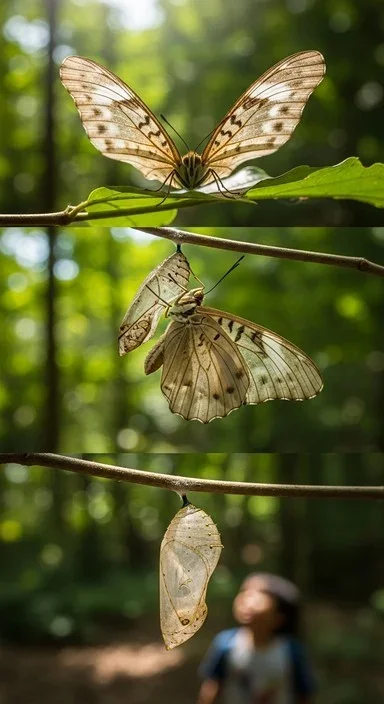
How does one respond to a new challenge in life, when almost overnight, everything changes dramatically? You look in the mirror and you recognise that your old physical self is to a large extent gone. There is denial. There is grief. And yes, in the middle of the tears and self-pity, an anger that could surprise you. Perhaps worst of all, the onset of a gnawing despair. You are in fact experiencing the inner and outer metamorphosis. All the self-help books in the world are of no use, for their premises are no longer relevant to you. The man looking back at you is not the man you once knew. The body you inhabited for sixty-five years can no longer serve you in the same ways. One can pretend to the world that these natural human emotions do not apply to them, that you have been able to rise beyond such fallible responses. Yet, and this much I must say, if you have belonged to the community of believers, and you have seen abundant evidence of Jesus Christ, the God-Man, at work in your life, then you will not question your faith nor put away the trust in the providence of your Creator. But your hitherto public stoicism, and those standard rejoinders to the problem of pain, as theologians have long framed this paradox—so much suffering in the world and still at the same time the goodness of God—will be thrown into upheaval and shaken to its core.

What this “thorn of the flesh” is for the present writer is entirely irrelevant. It is not the affliction itself that is of concern to him, nor is his experience at all unique. What he describes here is an undergoing that belongs in whole or in part, to at least some of his gentle readers. The question, then remains, how does one deal with a life-changing moment that has to some degree, made different much of one’s life. The saint, for there are saints who either live here in our midst or in monasteries or in faraway deserts, will reckon this as part of the soul’s journey toward redemption. Then there are too, the stoics, who courageously accept it all as part of the greater story of the cycle of life. But there is something very much in common in both of these positions, the acknowledgment whether be it manifest or tacit, of the joyful-sorrow of life and of the inevitability of our report here in this world one day coming to its close. From Siddhartha Gautama, to Socrates, to Saint Paul, to Blaise Pascal, to Martin Heidegger, to Sophrony Sakharov, to Viktor Frankl, to Irvin D. Yalom, to Dean Rickles, this ontological acquiesce is there in every profound thinker that has walked the earth. There are those winter seasons in which, as my dear friend Joseph Carvalko writes in one of his enthralling essays, that we are drawn to think of our souls in different ways until that time when they reach "that final purpose" (Paradox of Hope).

Pass then through this little space of time conformably to nature, and end thy journey in content, just as an olive falls off when it is ripe, blessing nature who produced it, and thanking the tree on which it grew. (Marcus Aurelius, Meditations)

When we are no longer able to change a situation, we are challenged to change ourselves. (Viktor Frankl, Man’s Search for Meaning)

https://stockcake.com/i/butterfly-life-cycle_3152617_1654139

So we live each day grateful for all we have been taught, not despairing of the new stories we will now live through, and ultimately grateful for these additional narratives we might now write down. For these things, the precious fruits of courage and perseverance are not at all outside the realms of reality and have been manifested in the lives of so very many. And more recently we witnessed this in the life of my late and much beloved Momma. Not long before she left us she “woke” from her deep sleep and in English (her second language which to this point she had almost completely forgotten) to say: “I saw Jesus. He said He loved me.” Her countenance was amazingly bright. Of course, one can interpret these fabulous words in different ways. We took them at their face value, and at that moment she gave us a vision of meaning above and beyond what I could hope to describe here, that change when even at its most difficult hour is not bereft of the light. Suffering can only be met head on, there are no shortcuts to the problem of pain. There on those hard edges of Gethsemane, where the human spirit is tested that it might be refined as gold, awaits the revelation of our true name written on the white stone (Rev. 2:17).

Our eyes and hearts can become opened to astonishing depths of love (now re-defined and re-experienced on account of our new condition) and to all-encompassing fields of compassion once only imaginable when we were at our very best—those days when we refused to chase away the birds from our fruit-trees and considered the practise of forgiveness as the highest expression of agape.

Even with all of the hard knocks and heavy collisions along the way, we all have a fabulously rich story to tell. Whether we can write it down or not, will matter only very little. The narrative will take on its own life to become our legacy. I remember an elderly monk from Mount Athos, Father E., who would refuse to wear laces on his boots. One afternoon after the refectory I summonsed the courage to ask him ‘why’ [and here I must confess to paraphrasing him a little]: “One must be prepared and on time for the unexpected.”

Photographs which have aged and yellowed

These are faithful keepers of our memories. They will suffer no contradiction. Their testimony does not bend. The traditional photo album has ever more intrigued me with the passing of time. Especially when those strong twinges of reminiscence stir in the heart—not unlike a favourite song or a familiar aroma. There is a discernible integrity to photos. Photographs which have aged and yellowed as we ourselves have become older. They are witnesses to some of the most precious moments in our lives. Here are found the traces of our biography and the roots which speak to the unravelling of that story. I am not idealizing the experience of leafing through the pages of our photographic collections—and yet this is precisely my point. In those pages with the plastic slides where we have slipped our treasures the memories rekindled are not always happy ones. There are photos of our dearly loved people who are no longer with us and on whom our eyes pause to linger a little longer. Could I have not been a better son to my father—or for that matter, a better father to my own children? In other places those cherished photographs of friends held tightly in our embrace who now are no longer in our lives. Was not this friendship meant for life—what did those beautiful smiles mean? We are forced to redefine previously held certainties. Still, and somehow, we might still resist to admit to these changes. In Aleksandar Hemon’s The Lazarus Project (2008) there is a perfect line: “When I look at my old pictures, all I can see is what I used to be but am no longer. I think: What I can see is what I am not.” These moments in time as they were captured in our photos is one of the best examples of that brilliantly encapsulating term popular with the eastern orthodox monastics when they reflect on life, “joyful-sorrow”. Each of these photos reawaken joy or sorrow in their own unmistakable way. I am not here speaking of photographs which have been photoshopped to present us in our idealized form or which can be speedily deleted. Susan Sontag has written of "image-junkies" in her On Photography (1977) a telling term we can nowadays appropriate to describe our obsession with the selfie. In the olden days of Kodak for the everyday user there was no manipulation of reality—and if you desired to destroy a picture to begin with you would have to locate it amongst the many others to hold it first in your hands. There was a moment where you might reconsider. And that one last look could make all the difference before you made the decision to physically tear the memory apart. You had to materially partake. Nowadays, we can delete in bundles to literally send to the trash bin, not having to ponder on the implications of our action. But that act in itself is no small deception, for our memories like old scars cannot so easily be wiped out or written over—and paper cuts can make you bleed. The old photo album, open it with the judgement of charity. In The House at Riverton (2006) Kate Morton’s words speak with a brutal yet compassionate reality: “Photographs force us to see people before their future weighed them down.” Whatever the lessons of this faithful keeper of our memories, it is our truthful friend and bigger than any novel.

Postscript: The two photographs are of our beloved Momma, Eleni Michael, née Fotineas. The first is from her late teens, the second and now struggling in those dreadful fogs of dementia, was captured recently by my own daughter, her namesake, Eleni Keziah M.

M.G. Michael Family Archives: Helen Michael

The street of my early childhood

January 14th 2011

341 King Street Newtown, Sydney

Photo: George Michael at the Reno Café in Newtown circa 1950 (Source: MG Michael Family Archives)

It had been a long time since I last walked down the street of my early childhood, King Street, Newtown,[1] where ‘the shoppe’ in its latest incarnation lives on. The Reno Café is presently Linda’s On King Street “giving classic dishes a modern twist”. I remembered many things, both good and bad. Mostly the memories which rushed back at me, one wave after the other, were good. I closed my eyes, if only for a few moments, and found myself transported back to that ancient place. Our ‘shoppe’. The unforgettable ‘cathedral’ of my early childhood. A place alive with readings as if from the Book of Acts. The haunted faces of the ‘congregants’, otherwise known as customers, send a lovely shiver up and down my back: Leo the ‘Cookie’, Mr Ted, Jack, Mr Bill, Molly, Uncle Charlie, Mr Bruce, Les, Ronnie, Mr Williams, Big Bob, Cecil, Mrs Pat, Harry the Boxer, Curly, Mrs Peters, Mustapha ‘the one-legged’, Mr Taylor, Bunny (he was the ‘Rabbit’ on one of those afternoon children’s shows on TV). There was the lady from Playschool, too, she was dressed in furs. Even now, I see her clearly, sitting at her favourite table, a lovely face with big dark eyes, oodles of jewellery. Lots of other famous people, as well, some were more infamous then famous. And many others from every walk of life, in this ‘diaconate’ of serving tables which lasted over half a century, and where sixty cents [the weekly “Special”] would get you a three-course meal and a cuppa. I can’t help thinking that Newtown attracted writers, Henry Lawson, Martin Johnston, John Forbes, David Malouf, Nadia Wheatley, to mention only a few. One of the local institutions Gould’s Bookshop is still there further up the street towards Missenden Road. With each succeeding generation, Greek, Turkish, Lebanese, Yugoslav, the names might change, sound a little different, but the stories were not too dissimilar and ultimately, they too, those faces, would become “ghosts” in their appointed time. As it has also been determined for us in our own allotted hour, to become the support players in someone else’s story.

My father now old and sick, approaching the ninetieth year of his life, holding the hand of his seven-year-old grand-child, George [they share the same name], points to the shop front with his bent arthritic finger. It is much changed now, ‘the shoppe’, gone are the old steel food counters, the faux wood seating. Linoleum flooring replaced by expensive tiles with fancy sketches. I do however, note in great dismay, that the white drop ceiling from the last refurbishment is still the same. The old man’s forearms are scarred by the scalding oils which burnt ‘stigmata’ into his flesh after five decades of hand-to-hand combat in the kitchen: “The shoppe… look, Georgie. Look, it is still here”, he says with the delight of a long-awaited revelation. I wonder what he was thinking on the inside. How much and what of those fifty-years would he have changed, if given the chance? I ask him. He tells me: none of it. I do not believe him. Maybe I do not want to believe him. I know my mother would have changed a lot. She never really did like the Reno Café. At least not as much as Dad and I did. It is right, isn’t it, memories similarly to truth, are oftentimes what we wish for them to be? Before we moved on, to the other ‘chapters’ down the street,[2] the other ageless ‘shoppies’, I look across the busy road, to where my first school used to be. Father would run over to throw me over his sturdy shoulder, when it was time to go home.

Ah, yes, and how could I forget Vic! An important person from Qantas who bore an uncanny resemblance to John Newcombe [handlebar moustache besides]. He was a friend of Buzz Aldrin’s he would tell us. I would listen to his stories with awe and wonder. It was as close as I would ever get to the Moon.


[1] https://en.wikipedia.org/wiki/Newtown,_New_South_Wales

[2] https://en.wikipedia.org/wiki/King_Street,_Newtown,_Sydney

This is why ‘the Machine’ concerns me

“Cannot you see, cannot all you lecturers see, that it is we that are dying, and that down here the only thing that really lives is the Machine? We created the Machine, to do our will, but we cannot make it do our will now. It has robbed us of the sense of space and of the sense of touch, it has blurred every human relation and narrowed down love to a carnal act, it has paralysed our bodies and our wills, and now it compels us to worship it. The Machine develops - but not on our lies. The Machine proceeds - but not to our goal. We only exist as the blood corpuscles that course through its arteries, and if it could work without us, it would let us die.” (E. M. Forster, The Machine Stops, 1909)

“Technique has penetrated the deepest recesses of the human being. The machine tends not only to create a new human environment, but also to modify man's very essence. The milieu in which he lives is no longer his. He must adapt himself, as though the world were new, to a universe for which he was not created. He was made to go six kilometres an hour, and he goes a thousand. He was made to eat when he was hungry and to sleep when he was sleepy; instead, he obeys a clock. He was made to have contact with living things, and he lives in a world of stone. He was created with a certain essential unity, and he is fragmented by all the forces of the modern world.” (Jacques Ellul, The Technological Society, 1954)

“Those who cannot forgive others break the bridge over which they themselves must pass.” (Confucius)

“Sorry, a machine can’t forgive your mistakes.” (Anon.)

“Books don’t need batteries.” (Nadine Gordimer)

"Now, a machine however subtle does not feel love, does not pray, does not have a sense of the sacred, a sense of awe and wonder. To me these are human qualities that no machine, however elaborate, would be able to reproduce. You may love your computer but your computer does not love you." (Kallistos Ware)

Source: https://twitter.com/nasahistory/status/951861340557234177

Source: https://twitter.com/nasahistory/status/951861340557234177

This is why ‘the Machine’ concerns me. Not that it might one day determine what I might eat or drink, or whether I can drink or eat at all, but that it will not hear my cries. That it will know nothing of physical thirst or of gut-wrenching despair. How can ‘they’ not understand this? It will have no comprehension of forgiveness. It will never wipe the slate clean. There is no delete. No such thing as absolution. It will deny to give me a fresh start [another more terrible dimension to DoS attack]. Mercy does not run through its microcircuitry. Don’t rush to embrace it too soon, this Trojan Horse which comes as a peace offering to the gods. The Creator has mercy for us, “[t]hough your sins are like scarlet, they shall be as white as snow; though they are red as crimson, they shall be like wool” (Is. 1:18). The ‘Machine’ which is ‘spirited’ by power to apply force and control, is unmoved to our petitions, “Dave, this conversation can serve no purpose anymore. Goodbye” (2001: A Space Odyssey). This is the elephant in the living room. Something holds us back, a foreboding, a premonition perhaps, that keeps us from directly addressing this subject.

It really is difficult to see people broken, humiliated, and in some instances to have their lives taken away from them because of something they might have said five, ten, twenty or more years previously. For someone, for whatever reason, to dredge up ‘sins’ of the past in order to hurt, or more concisely, to cause irreparable damage to the other. Who among us hasn’t said something which they haven’t later regretted, or where our words and sentiments can be elicited to carry a meaning or an attitude not originally intended? These can be errors of speech, peer group pressure, or the result of youth and immaturity. Yet it is there, it has been recorded. It is ‘played back’ oblivious to the context. Context is that which “throws light on meaning”.[1] We all make stupid mistakes. It takes time for wisdom and life experience to meld. And in other instances we get to a certain age and become anachronistic dinosaurs. The ‘Machine’ [input-process-output] is calculating and efficient. To ‘terminate’ these people is to simultaneously terminate ourselves. It is to do to another, that which can be done back to us. The ‘Machine’ defines us by our mistakes. It groups us in categories and dumps us in information silos. Is this the fate of the human spirit, to be “born into this?”[2] Imprisoned inside the “big iron” mainframes… like Ted Hughes’ proud Jaguar in “prison darkness” in its cage?

To forgive is an expression of one of our highest elevations as human beings. It is nobler than our finest literature, our greatest art, our most beautiful music. It is greater than all these when practised with a true heart for it takes us into the realms of the deepest mysteries of our combined representations of the Divine. In our religious experience we do not awe at the Creator’s ability with the harp or the writing of celestial sonnets, but rather we are amazed at the expression of God’s mercy and forgiveness. To the extent that we ourselves do the same with our fellow human, that is, to extend our grace towards those who we perceive to have wronged us, we are in the “image and likeness” of the Creator (Gen. 1:26).  We forgive that we could enter more genuinely into the space of compassion, that we might go on loving. The root of “forgive” is the Latin word “perdonare,” meaning “to give completely, without “reservation.” (“perdonare” is also the source of our English “pardon”).  We give up the desire or the power to punish.[3] The ‘Machine’ knows nothing of compassion. It will not forgive because it cannot love. Algorithms don’t have soul; they are devoid of incorporeal essence:

“You can’t forgive without loving. And I don’t mean sentimentality. I don’t mean mush.” (Maya Angelou)

In life not all acts of fellowship are received well or reciprocated. When the grace we give is not accepted and is returned it can be brutal. It is a place of heavy tears. We are living increasingly in a world which keeps us isolated one from the other, and where we might be called-out or cancelled as swiftly as the swatting of an irritating fly. This is not because people are wicked, on the contrary, most people are generous and kind-hearted. We are all fragile vessels on an oftentimes bumpy journey. We can crack. And this is the tragedy, the irony, that this very fragility draws us into systems and networks and ‘mobs’ where we do things so that we, ourselves, might not be hurt. It is increasingly becoming a survival technique. The online world especially has hurt and devastated people by its millions, either by their own hand [addictive behaviours] or cyber-attacks [bullying, misinformation]. “As rapidly as technology advanced,” writes Joseph Carvalko in his prescient novel Death by Internet, “goodness declined…”. Communication technologies are not exempt. They are the voice of ‘the Machine’. The apparatus has no spiritual knowledge of humility and so it cannot practise repentance. Computational empathy or affective computing, is mimicry at worst, and simulation at best. The ‘Machine’ possesses no natural ontology, knowledge representation and reasoning, does not automatically equate to higher consciousness. It cannot possess “human memory”. And therefore it does not know what it is like to be human. I dread to think, if the present-day capabilities of our 21st century technology were available to past totalitarian regimes [especially Advanced LBS and monitoring systems], how enormously more multiplied and innovative their crimes would have been.[4]

To meet likeminded spirits along the way means so very much. It could make all the difference in the world, to have the strength, to hold onto the courage, to keep pushing apart that impalpable space between the light and the darkness. How good to have a friend who is real and co-substantial. To receive an encouraging message to remind you of your humanity, to have sympathy for you precisely because of your flesh and blood. To be accepted for all your faults and list of misdemeanours. And if need be, as it sometimes will be, for one or the other to say “I am sorry”, and to hear those marvellous words in reply, “All is good, I understand.” Not just a graphical control element, or a voice on the other side of an interface, or a recorded message with push button instructions. A machine could be programmed to ‘speak’ all the good things in the realm of metaphysics, but we will always have the perspicacity, that penetrating discernment, that it is artificial, and synthetic. Those words, the programming languages [even if they should ever become distinctly compositional], will never, cannot ever come from the heart [“the blood-beat” of the poets], the place of will and intention. Technology, of course, in and of itself, is not the problem, but our connection to it needs to be kept under constant vigilance, that is, we must keep awake as to how it infiltrates and attempts to redefine our very existence as human beings. When we are in need of some light and succour all the artificial intelligence and interconnectivity in the world will mean nothing. It is like being trapped in a vault of bullion of an unlimited value with no means of escape or communication. What then the benefit of all that precious metal? What good if we are building towards this terrible prediction:

“If you want a vision of the future, imagine a boot stamping on a human face – forever.” (George Orwell)

We give our technology compelling names and dress it up with the most dazzling colours and logos. Many of these technologies, ultimately the most potentially dangerous, we make anthropomorphic. We dress up for example, and give large adorable eyes to the robots. We make-believe that we are understood and can even be loved by ‘the Machine’, that its cold intelligence will keep us warm at night. ‘It’ will seek those divine attributes which we ordinarily attribute to Deity: omnipresence, omniscience, omnipotence, and omnificence. But being created in the image and likeness of the creation itself it cannot by definition ever achieve them. And so it will incrementally grow to become commensurately desirous and aggressive. The monster built by Victor Frankenstein eventually turns on his creator in murderous rage for making him hideous and incapable of fulfilling its integrated dynamism [5] . The singularity will not breathe new life into us to make us immortal. It could one day make you the ‘undead’, but never immortal. We would do good, as well, to not quickly forget the lesson of the story of the Tower of Babel (Gen. 11:1-9). Technology gone awry on account of the hubris of the builders and the resultant breakdown of communication.

We know ourselves better than those who might be wanting to hurt us and much better than ‘the Machine’ which wants to imprison us in its central repositories and data warehouses. Their efforts to cause us pain, to potentially bring us to some humiliation, pale in comparison to our own battles, the fight against our compulsions, and those myriad fetishes within. We know much better than our real-life adversaries and the ‘electronic eye’ of the darkness fighting, assailing our souls, as we try to limit its impact on our lives and on the lives of others. If only they [both the adversaries and the ‘comptrollers’] knew the whole truth, had some insight of the context, they would be ashamed and terrified at the same time. Big Brother and uberveillance as much they might try to get inside the head, to get to the “whole truth” with their own particular strains of watching techniques, can only endlessly fall short of the mark. Our life is a mystery infinitely inexhaustible. We are so much more, much more than our search history and CCTV captures. It is weight enough to grasp what those words below from Miłosz mean for each one of us, before even ‘the Machine’ goes after our self-discovery to take away that private space where away from prying eyes we do our living and our dying: 

“To believe you are magnificent. And gradually to discover that you are not magnificent. Enough labour for one human life.” (Czesław Miłosz)

[1] https://www.merriam-webster.com/dictionary/context

[2] https://www.youtube.com/watch?v=qQJengH58ow

[3] https://www.etymonline.com/word/forgive

[4] https://ro.uow.edu.au/cgi/viewcontent.cgi?article=1716&context=infopapers

[5] https://mitpress.mit.edu/books/frankenstein

On the many different faces of loss

Loss makes us feel incomplete

Loss makes us feel incomplete, for some time it can change us. How we feel about ourselves, and how we might present to others. There is a contraction to our perception. That is, how we might see and understand things. We instinctively put limits on our prospects. We don’t like the feeling of something “gone missing”. It’s like that uncomfortable feeling we get when we see a coffee table or a chair without one of its legs. Sometimes it can simply come down to symmetry and ballast.

Why do we feel the impact of loss so acutely

What is loss? “[t]he fact or process of losing something or someone”. It is etymologically related to the Old English los for ‘destruction’. This is what it can feel like at its worst, to have been broken apart. In the Old Norse los was used for the “breaking up the ranks of an army”. In divers ways we could feel ‘lessened’ or ‘inferior’. Made weaker by our loss. Consider a marriage which breaks down with one partner walking out on the other. This can cause for one of the partners to feel a loss of dignity and self-confidence. When a young person fails an examination, they might question their intelligence, again suffering a loss of self-belief. Our personalities are diminished, we believe or otherwise convince ourselves. Others might during a moment of cruelty make sure to convey to us, that we have lost some of our shine. We are made to feel humbled before our peers and friends. Nobody for instance, wants to hear these dreadful words which can stay with us a lifetime, “I have lost respect for you.” The hurt compounded immeasurably if it happens that it is undeserved. 

On the question of loss and its many faces

Every moment of our lives we are losing something. Our brain cells die in the thousands per second. As we age our hair falls out. We lose our teeth, our eyesight dims, and so too our vigour. We can feel ‘destruction’ going on about in our own body. And then to discern its evident dent on the bodies and minds of our older loved ones. We lose them too, and people comfort us, they “share in our loss”. Then the hours and days that we ourselves have left remaining on the earth, these, too, are lost. The question is then, how do we cope with loss and what are the different types of ‘loss’? Sometimes we are at a “loss for words”; or are made to “lose face”; we can “lose our peace”; we “lose our memory”; or “lose hope” and even “lose our mind”. People also “lose their self-belief” and can also “lose their faith”. We have all of us, lost things. Lost something. It can be natural or forcible. And our response to loss can reveal us to the world. It tests us. Loss can denude us. “Every one of us is losing something precious to us. Lost opportunities, lost possibilities, feelings we can never get back again. That’s part of what it means to be alive.” (Haruki Murakami)

What can we give to people who have suffered loss

How do we respond to others who are experiencing loss? The first thing is not to patronize. Nobody likes to feel they are being talked down to. The best way is to begin with: “I might not know exactly what you are feeling right now, but I, too, have experienced loss.” Almost always there is common ground to be found in another’s loss. It is best to remain silent for a while, and only to listen. Oftentimes we can help replace that which has been lost, a replacement toy or a new pet for a child, or a favourite book or a pair of reading glasses. But other times the loss is heartbreaking and enduring. The loss of a loved one. This is irreplaceable. This movement of charity towards the other will require the marvellous charisms of empathy and compassion. Each situation will require a different approach for there are many different types of losses, and each of these will be felt differently. If someone is grieving allow them to grieve, do not be tempted to tell them ‘how’ to grieve. Severe psychological or mental pain is personal and some things cannot be “fixed”. It is good that you are there. Empathy and compassion, to have ‘feeling’ for and to ‘co-suffer’ with the other, will open up our hearts to the anguish of the other’s loss. So we listen, we try to walk in the other’s shoes. We do not turn away. Sometimes we might even be as the ‘good shepherd’ to go after the ‘lost sheep’ (Lk. 15:3-7). “Loss” could become a mission of seeking out the wounded. 

Do not feel harried or be too quick to replace what is lost 

Sometimes we might panic and hurry to replace what is lost without too much thought or proper consideration for the outcomes. This rush to replace what has been lost, that is, to quickly fill the vacuum, can introduce other more hurting and lasting losses. It can lead from one mistake to another. Like an amateur painter who in trying to remove one smudge will inadvertently create a dozen more. If something is taken from us which, for example, we reckon to be rightly ours, we  could be tempted to retaliate without thinking through the consequences. A more discerning response could yield the better result. Bad choices can only lead to further experiences of loss and disappointment. The rush to find a new partner, for instance, which is not uncommon, can lead to further loss of self-esteem and heartache. I like very much how Ann Voskamp has put it, “[i]n our rushing, bulls in china shops, we break our own lives.” So wait, let us pull back for a season, re-organize ourselves to ‘count our losses’. Then we can during our quiet time make those new plans in moving forward. For those who belong to believing communities, it is prayer which will inspire the next movement.

How loss can oftentimes be good for us 

We are too often conditioned even from our earliest times to the reckoning that ‘loss’ is unavoidably bad for us. “Loss of playtime” let’s say, and later to be upgraded to “loss of privileges”. It then becomes a conditioning exercise, behave and things will be restored, with the result being, reflection time or alternatives can be overtly discouraged. This in itself could be the bigger loss. When I have experienced loss, whether that could be status or health, that is, loss on a personal level, I accept the early days will be hard. Then I tell myself, this has been for the good, because I have acquired new knowledge to do with resilience and a deeper faith in those things, I hold to be true. I am still alive and new words and definitions have been gifted to me. I can now grow further into my potential. It can soften my heart. It can break it. This makes it easier for revelation to enter deeper into its folds. Loss, too, could be good for us in this way, upon realizing that something is “missing” we might be as the woman who having ten silver coins loses one, to then “light a lamp, sweep the house and search carefully until she finds it” (Lk. 15:8-10). 

A telling Old Testament story

Joseph’s “long coat of many colours” (Gen. 37:3) brought him into conflict with his older brothers for it reinforced to them that he was their father’s, Jacob, favourite son. On account of their envy they conspired to sell him into slavery after having initially planned to kill him! The story is one of the most well-known from the Old Testament. Joseph owing to his prophetic gift ultimately rose to a high position in the land of Egypt, indeed to the highest most official position next to the Pharaoh. There came a time of reconciliation which shocked his brothers, but Joseph cognisant to the divine providence of God understood that ‘evil’ [and in this case a terrible loss of homeland, trust, and family] is not always what we might assume it to be: “But Joseph said to them, “Don’t be afraid. Am I in the place of God? You intended to harm me, but God intended it for good to accomplish what is now being done, the saving of many lives” (Gen. 50:18-21).

When the loss seems to us too unbearable

There are those losses which will seem too unbearable to us. Here, too, there is a way through this aching. We know this, for not few have been to such fiery places after even the most dreadful of losses, have been scorched, and returned to share their testimony. But we will have to ultimately work through this labyrinth and come to terms with it, for ourselves. This is the hardest truth, “[w]hat is to give light must endure burning” (Viktor Frankl). Bitterness and anger are normal human reactions. Yet we should be especially weary that these emotions do not keep too long in the heart which is our ‘spiritual organ’ and functions in an analogous way to the eye, filtering darkness and light. Change following loss can, and does hurt, and it will often hurt a lot, but it can make all the difference. It is temperature shock which hardens steel. It is intense heat which changes molecular structure. Franz Kafka who was fascinated with ‘transformation’ considered “patience” very high on the list of virtues. So endurance, once more, becomes the big key. It took Christ an eternity to reveal his blinding glory to his creation, “where his face shone like the sun” at his Transfiguration (Matt. 17:1f.). Allow for time and grace to make the necessary changes, similarly to hitherto unknown colours, created with the passing of the years on natural landscapes. “When all else is lost,” wrote the epigrammatic Christian N. Bovee, “the future still remains.” I know, too well, sometimes it can be like breaking your knuckles on steel. Some pain will not go away, but with time it will be lessened. But keep steadfast, day by day. Ultimately, that is the greatest secret. And we, all of us, know this to be true. 

Sometimes, too, we just need to lose things

Sometimes, too, we just need to lose things. ‘Stuff’ which is weighing us down, or causing us harm. Toxic relationships, for example. Addictions. Bad habits. Phobias. Things which are possible to overcome. These types of losses should never frighten us, but on the contrary, they should fill us with the most wonderful of all the expectations, lit., “an awaiting”. Like the very eager, but controlled trombones, in Shostakovich’s 9th Symphony. Or the terminal buds of lotus roots in pools which will bud when the temperature is just right.