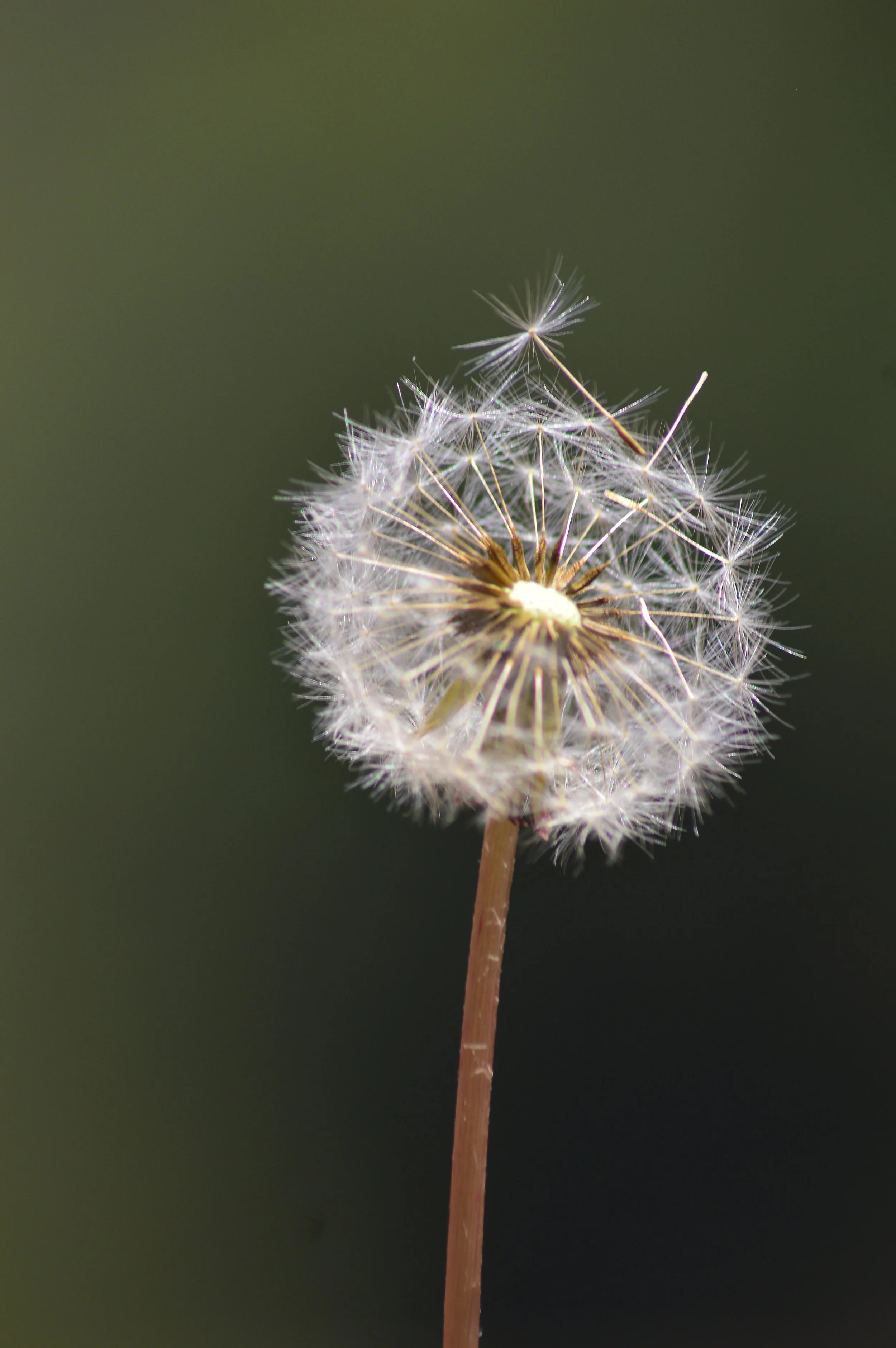
At different times I have wondered how I would respond

I do love the good-humoured mathematician and lay theologian John Lennox. Not only for his intellectual brilliance in articulating the apologetics of the Good News, in a manner evocative of the great C.S. Lewis, but also for the ways he has reminded me of a dear friend, the logos-inspired poet Les Murray. Yet there is something else as well. Especially given the present challenges in my own life, the charismatic Lennox has often spoken of “finishing life well.” This right counsel, takes us back to Saint Paul’s moral parenesis, which has inspired and lifted the spirits of countless souls across the centuries: “I have fought the good fight, I have finished the race, I have kept the faith” (2 Tim. 4:7).

https://pixabay.com/photos/flower-dandelion-wildflower-nature-7700011/

At different times I have wondered how I would respond if I were sitting in a specialist’s surgery, waiting to hear the results of medical tests for a potentially life-threatening disease. For instance, would I remain stoic upon hearing the word cancer? Would I break down, if only for a moment, terrified of what it could mean? Or might my reaction fall somewhere entirely outside what I had imagined? In truth, one never knows how they will respond to news—good or bad—until it actually happens. Is it, then, the same for a believer of a religious community, and particularly for one of its theologians? I was to learn this on a pleasant morning in Wollongong, in late January of this year, during a consultation with my empathetic urologist, Dr. R. It was not at all as one might have imagined. The news was delivered no differently than if a general practitioner were calmly informing you that it was nothing more troubling than a sore throat. Except that this time, it all appeared to unfold in slow motion. Each word carrying with it a resonance that would need to be newly explored and analysed: “I am sorry it is cancer—Michael, but it is not a death sentence.” For a few moments at least, it seemed as though I had stepped into another world. This is a place where the archetypes stood in sharper relief, and where at any moment they might cut straight through you.

This is the hour when one’s metaphysical beliefs, whether deeply theistic or commendably stoic are pulled apart and, for some, stretched to their breaking point. Suffering in its various guises, if we should allow it, can easily undo us. When death rises to speak in its own ex cathedra voice, there is, one way or another, little to say in reply. The Great Divide has spoken shāh māt ("the king is helpless")–Or is he? Maybe not quite yet. If you are familiar with Moritz Retzsch’s 1831 painting The Devil’s Checkmate and with the story of chess master Paul Morphy’s response, you will know what I mean. For those of us who belong to a religious community, how often have we heard, or ourselves declared, the words offered in consolation by the Prophet Hosea but later to be made famous by Saint Paul: “Where, O death, is your victory? Where, O death, is your sting?” (1 Cor. 15:55). The counter of every soul to such news is as unique as the individual response to our deepest joys or hardest sorrows. A range of emotions, natural to the human condition, can overwhelm us, and the comforting illusion that such things only happen to other people is fast destroyed. The reality is that it will happen to us all. Death comes, sooner or later—if not for us now, then to those we love, to our close of kin, and to our friends. And our hearts ache, too, at the daily images of lives taken in faraway places, without the blessings and benefits we ourselves have become ordinarily accustomed to. Perspective remains one of our most trustworthy teachers, and if we remain honest enough, it cannot fail us.

It all goes much too quickly. I could close my eyes and, for a few moments, go back to my untroubled teenage years, running about like a puffed-up bull on rugby league fields in Sydney and the country. Then before long I snap out of it. The mirror will make liars of us all. If we have not mentally prepared for this unavoidable and messy rencounter, one that philosophers and theologians alike agree will become the absolute test of our core beliefs, we are likely to panic and fall into those self-defeating emotions of denial and anger. Still, if we can get through this fiery trial and comprehend it as an awakening to something deeper and more nobler within us, then we will not only endure and persevere through it, but we will be initiated into revelations and lasting lessons we once believed beyond our reach. The giving and the asking of forgiveness becomes a commonplace experience. All manner of colour and sound become more vibrant and sharper. We can become humble, yet strong vessels of comfort to others. The expression of love and compassion are now as commonplace as our daily bread. Material aims and professional goals are much shifted or made altogether insignificant. Divine grace and moral strength can arrive in the most unexpected way. Saint Nilus of Sinai speaks in the tradition of Socrates (who posited that philosophy is a preparation for death): “You should always be waiting for death but not be afraid of it; both are indeed the real characteristics of a person who pursues wisdom.” This is the “memory of death” which the contemplatives of our major religious traditions practise, this they do in the most positive of ways as a reminder to cherish this present hour, and to not misuse the time we have each been given.

After a while these archetypical disclosures of the battle, should we open up ourselves to them, will allow for bursts of light to enter into our hearts. This is not to whitewash our suffering or our fears, these conditions are all too real, and they will leave their rough mark on both ourselves and on those we love, but how we respond to this confrontation and where we allow for the dark side of our imagination to take us, is what altogether matters at present. There will be the dark night when for a believer it could appear that the Father is scandalously absent, or for our other brothers and sisters to seem that it has all been meaningless. These are very much the same feelings of inner collapse and that dread condition beyond the disease of the body—Søren Kierkegaard reflected in these terms when speaking on the “sickness unto death” that is, the deepest of despairs. Our modern existentialists have similarly spoken of this paralysing angst, as “the nameless fear”. It is not out of place, then, to recall that as a young student of divinity many decades ago now, I was struck by this fascinating revelation, that in the New Testament Gospels, the God-Man’s most repeated exhortation was not to be afraid: “Take courage; it is I, do not be afraid” (Mk 6:50).

Is life unfair? Yes, but what does this mean

For myself I have been parted from my possessions, stripped of my offices, blackened in my reputation, and punished for the services I have rendered… [s]o then I may cry aloud… (Boethius, The Consolation of Philosophy)

And we know that in all things God works for the good of those who love him, who have been called according to his purpose. (Rom. 8:28)

In my younger days, filled with enthusiasm for theology and navigating the early stages of what some might call a “messiah complex” (a term familiar to seasoned seminarians and priests), I would have confidently answered the question, “Is life fair?” with a resounding “yes”. At the time, I believed I had a firm grasp on divine providence. I was young, healthy, and felt as though the future held limitless possibilities. Vigour and optimism, pulsed through me, even though I had already witnessed suffering. Still, I believed that my perspective aligned with the nature of God’s justice. I was also familiar with the story of Job and had reflected on his unwavering faith amid trials; a story that, despite its initial horrors, ultimately had a positive ending. The biblical narrative of the crucifixion and resurrection of Jesus Christ was, as you might expect from a young seminarian, at the very heart of my worldview. But then, things began to change. Not my worldview, nor my steadfast belief in divine providence, but rather how this very theology was to be practically understood and lived out beyond the seminary walls and course textbooks.

As my life became richer with experience over the years, I began to confront certain harsh realities— loss, illness, death, and the injustices that came with them, whether they affected me directly or those close to me. At the same time, my travels exposed me to the stark economic disparities across the world. This combination of personal encounters and global contact led me to question the early assumptions I had that everything was, in fact, “good”.  In my role as a pastoral cleric, as I would then have conceived of myself, my visits to the wounded and terminally ill and especially to the young, were precious opportunities to offer comfort to those grieving. And then there were my weekend walkabouts through the cemeteries of Sydney where the message of the Cross in its deeper manifestation was made known to me. Over time, this became less about offering the idea that everything was divinely planned and more about acknowledging the raw pain of loss, helping others find solace in the midst of their despair.

My self-confidence began to erode after clashes with my superiors, which eventually led to my departure from the ministry. I found myself adrift, without an identity, and at every turn, blocked from new opportunities by the Church I had once served but could never stop loving. In time, more followed. Loss of valued friendships and my good reputation. There are many ways to stand up a human being against the wall to execute them. Later the taking away of my intellectual labour and eventually chronic illness with its everyday pain. Before that, one branch of my extended family was wiped out due to disease. Was this fair?  It was a question I found myself asking more and more. I must accept that, in my case, having requested to be relieved of my ministry for reasons I still cannot openly share, I did also contribute to my own tribulations and for this I am alone responsible. But what about the suffering of others— those who had brought none or very little of this anguish upon themselves? People stripped of their rightful place, denied the chance to reach their potential; the seemingly undeserving rising to positions from unqualified persons, or worse, placed there through bribery or fraud. Even more heartbreaking when innocent children are ravaged by illnesses, or in other places, made to die of hunger and thirst due to economic conditions. Such suffering is not optional. Was this fair? The Scriptures themselves also seem to speak to this truth about the unfairness in life: “Under the sun, the race is not to the swift, nor the battle to the strong, neither yet bread to the wise, nor yet riches to men of understanding, nor yet favour to men of skill; but time and chance happens to them all” (Ecc. 9:11).

I am not here to argue for a theodicy nor delve into the famous "problem of evil," that I have tried best I could to address in my novel and in a few of my essays, but simply to ask: Is life fair?

A saint would more than likely say, “Yes, life is fair, for it is all preordained by a just and all-knowing God.” I am not a saint, of course, and as such, I can no longer make such sweeping declarations. I cannot view the world through the same lens as those enlightened souls, blessed with unwavering faith. As I approach my 70s, I have come to understand more deeply the unpredictable nature of life, its shocks, disappointments, and uncertainties. This is not to say that there are no moments of pure joy; indeed, those moments exist. But life’s duality— the intertwining of joy and sorrow— is the lesson we must learn, one that speaks to the core of our existence. There is a spurious saying attributed to the Buddha, yet it persists since it is informed with tried and true wisdom: “Pain in life is inevitable, but suffering is optional. Pain is what the world does to you, suffering is what you do to yourself by the way you think about the pain you receive.” I well understand, these are enormous enquiries to make of the human mind, it is not inconceivable that for a serious thinker, they could last a lifetime.

Let me pre-empt my few, gentle readers by saying this: life is not fair. Even so, what does this mean? My own response, which is all we can do for now, comes from a man who, though jaded, endures. Nothing more, nothing less. I have witnessed and experienced both the beauty and the harshness of being active and involved in the world. In the same way to you, for we are made from the same essential elements, or “mud” and “clay” as mythologies and religious traditions have described. I could easily quote a long list of philosophers and writers, Friedrich Nietzsche, Hannah Arendt, Primo Levi, and Aleksandr Solzhenitsyn, for example, who have eloquently explored the inherent unfairness of life. It would be enough for now to read the chapter which features Ivan Karamazov’s well-known argument in "The Grand Inquisitor" from Dostoevsky’s The Brothers Karamazov. In it, the intellectual and analytical Ivan Karamazov, raises a compelling argument about the existence of suffering in a world supposedly created by a benevolent and omnipotent God— arguments that can be traced to the Russian philosopher and theologian, Vladimir Soloviev (and a close friend of Dostoevsky’s). Jesus Christ himself in the Garden of Gethsemane asks for the cup of suffering he was about to endure to be taken away from him (Lk 22:42). I will return to this pericope in a moment which has on more than one occasion saved me.

Through these brief reflections, dare I call it “flash theology”, I find a path toward self-healing, like I do with most of the humble ponderings that I share on this web site. Primarily, these reflections serve as a conversation with myself and, later, as something for my children to read. But I also hope they offer some meaning and a little solace to the occasional visitor— to a soul on its own irreplaceable journey, seeking a quiet park bench to rest for a moment. In recent months, I have been compelled to reflect on this problem even more deeply, due to personal losses and the pain endured by a family member. But, as I have shared earlier, the question of life’s fairness is one that has long weighed on me. Beyond the comfort of Scripture, particularly the Book of Psalms, I have oftentimes reflected on Viktor Frankl’s Man’s Search for Meaning. In essence, the Holocaust survivor and psychiatrist, Frankl, offers profound insight when we feel ourselves to have become overwhelmed: “When we are no longer able to change a situation, we are challenged to change ourselves.” The interesting thing here is that Elder Ephraim of Katounakia, an Athonite monk, in his own way, conveys a very similar message:

Everyone has a cross to carry. Why? Since the leader of our faith endured the cross, we will also endure it. On one hand, the cross is sweet and light, but, on the other, it can also be bitter and heavy. It depends on our will. If you bear Christ’s cross with love then it will be very light; like a sponge or a cork. But if you have a negative attitude, it becomes heavy; too heavy to lift.

The Agony In The Garden by Gustave Dore

And so I now return to the Lucan pericope of Christ’s passion in the Garden of Gethsemane to offer my final thoughts. On a personal note— and I believe I speak for most— there are moments in life when we feel that things are unfair. However, unless we allow ourselves to be entirely undone by these struggles, we have at least one time-tested way forward: to acknowledge the cup we did not seek and to accept it as a sign. “Father, if you are willing, take this cup from me; yet not my will, but yours be done” (Lk. 22:42). Here in His underserved punishment, the God-Man acknowledges both the presence of suffering and the overarching goodness of God Himself. If we endure, transformation awaits us, just as it did for Jesus Christ after Calvary, in His resurrection. This endurance in perseverance is not about resigning from life; rather, it is about recognising that, even during the most challenging of trials, there exists a path toward realising the fullness of our potential as human beings. Accepting, too, that there are many things to be grateful for, in spite of any injustice that might surround us. So, yes, life might not always be fair, but its “joyful-sorrows” are not without meaning.

Like a tree I would be blasted by wind, struck by sun and rain, and would wait with confidence; the long-desired hour of flowering and fruit would come. (Nikos Kazantzakis, Report to Greco)

Over the years, I have come to personally understand and have observed in the lives of others that, in the face of pain, an unfairness done to us can often lead to unexpected rewards, and beyond all measure. In fact, there is a freedom in it, along with a unique opportunity for genuine growth, even if for most of us, this may seem paradoxical or counterintuitive. So, yes, together we can say, “Blessed are those who mourn” (Matt. 5:4). I do not pretend. Little of this is ever easy. It can be brutal to the spirit of a person, and unbearingly so at times. Is there someone whose mental anguish you can help to alleviate with a word? Have you the power to right a wrong where an unfairness has been done? Even by that one single act of kindness, souls have been saved to affect generations. It all goes too quick. We soon enough grow old. It is then that these certainties of the human condition reveal themselves to be our infallible truths. As for the suffering of the innocent, those who do not have the time, nor the means, nor the luxury that we have been blessed with, tangible hope can only touch their lives through the opening of our hearts in communion, that heroic compassion may burst through. Time and time again, it has been revealed acts of supreme generosity, to the extent of self-sacrifice, are not beyond our reach— if only because we are capable of the divine, capax Dei.