My priesthood, however weak or strong it might have been, was the keystone of my life. Everything I did, or thought, or believed in, revolved around it. Importantly, it was the outward symbol of my faith. It identified me. A keystone is the wedge-shaped embellished voussoir at the crown of an arch, serving to lock the other voussoirs in place. Remove it and everything falls to pieces. It all becomes a pile of stone. Often too, I would think on the potter and clay imagery in the Old Testament and what it might now mean when I turned to God in prayer (Isa 29:16). Would He turn His face away from me? One of the challenges for the potter in using pattern on three-dimensional form we are told by those who have mastered the craft, are that of marrying the relationship of interior to exterior and the association that exists between them. What would now be my connection, not only between my interior and exterior life-worlds, but also with my Maker? This is one of the great temptations that we have to face as human beings, that we too readily identify ourselves and others with the brokenness. And playing on the inside of my head as if on a continual loop, [something not uncommon for an OCD], Pergolesi’s Stabat Mater to which I had become transfixed a few months earlier during my night drives out to the Cronulla sand dunes.
Taking my cassock off for the last time
Now there was the hard practical matter that would soon also face me, taking my cassock off for the last time. Afterwards in a little poem I would speak of it as the painful process of “scraping” it off my back. This I would put off until a few weeks later, when I found myself in Madrid. Here too in ‘the city that never sleeps’, as was happening throughout the world, the question on everyone’s lips was whether Israel had “responded” to the missile attacks from Iraq and what it would mean if they were drawn into the developing military crisis in the Gulf. I was in Europe during the early stages of Operation Desert Shield (August 1990-January 1991). It was an apropos ‘soundtrack’ to my own private war which I was waging secretly within. One thing would remain certain, that I would never forget having served at the altar of Christ and this would forever mark my life. Some experiences will burn us irrevocably. And all you can do is learn to live with them.
Had I been older and blessed with a lot more wisdom I would have transitioned back into lay life quite differently but often I felt like one of those animals in the night, startled by that sudden flash of headlight from an oncoming vehicle. I know from experience that I am not the only one in such a position who has felt this overwhelming brutalized emotion. There are a number of things I know I could have handled better. The cause of my torment rested more with me and I must shoulder the blame for the greater part of my suffering. It was from this time that my struggles with depression would develop into unremittingly long periods of melancholia and bring me close to death more than once. I was no longer trusting in my Lord and God. Prayer had now become very difficult. There were months, long months on end, when I was in the condition of acedia, a spiritual negligence, a dreadful despondency, which feeds the passions and which Saint John Cassian calls "the noonday devil", but I would force myself to read something from the Psalter every day.[5] It was better than nothing, a few drops of water can keep you alive. Later I would read the autobiography of my brilliant teacher who was very much responsible for instilling in me the love of philosophy and my lifelong interest in existentialism, the gentleman scholar Paul Crittenden. A catholic priest of the Archdiocese of Sydney, he had left his own clerical orders to continue with his professorial teaching in the most seamless and dignified of ways.[6]
I wonder if I am for all time lost
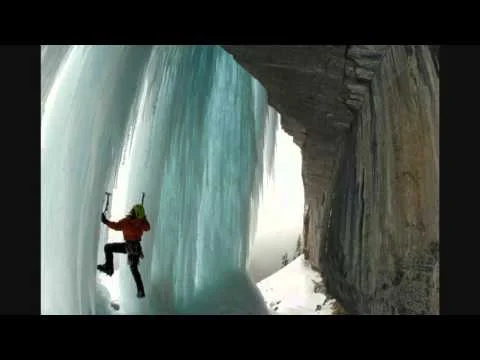
This would not happen to me. Nothing was going to come between me and my love for the Nazarene. Now everything is different. I wonder if I am for all time lost. I had been a conscientious student of the church fathers and especially of some of the harder hitters like Chrysostom and Augustine. Their collective voices which would later once again soothe and lift me up would now seem to be relentlessly condemning me. Kafka’s travelling salesman Gregor Samsa wakes to find himself a bug and I too suddenly find myself in the middle of something that I was not prepared for. And I feel ugly. I wanted to hide, to examine my hideousness in the privacy of my own world. In the end, a lot of what was happening to me after my departure from Tolleshunt Knights and then upon my arrival in Madrid where I learnt more on the meaning of La noche oscura del alma, had to do with a word in spiritual literature which has been much misunderstood, surrender. It means to “give up, deliver over”. It does not stand for giving up on the fight which are the battles of the soul. At a certain point we need to let go of the driftwood and give ourselves over to the tide. Years on the wisdom of a leathery trucker, someone I would befriend at the markets in Flemington where I used to work, would have been good advice: downshift when going down the ice.
Concerning Spiritual Warfare
“Everyone who would follow our Lord Jesus Christ is engaged in spiritual warfare. The Saints by long experience learned from the grace of the Holy Spirit how to wage this war. The Holy Spirit appointed their footsteps and gave them understanding and the strength to overcome the enemy; but without the Holy Spirit the soul is incapable even of embarking on the struggle, for she neither knows nor understands who and where her enemies are.”[7]
[1] https://www.amazon.com/Saint-Silouan-Athonite-Archimandrite-Sophrony/dp/0881411957
[2] https://orthodoxwiki.org/Sophrony_(Sakharov)
[3] http://www.thyateira.org.uk/index.php?option=com_content&task=view&id=373&Itemid=1
[4]
[5] https://blogs.ancientfaith.com/glory2godforallthings/2017/06/26/priests-thoughts-depression-anxiety-soul-body-brain/
[6] https://www.amazon.com/Changing-Orders-Scenes-Clerical-Academic/dp/1876040866
[7] Sophrony op. cit., p. 423